Joe Yaffe, COO at Cowboy Space, on Whether Data Centers in Space Are Cheaper
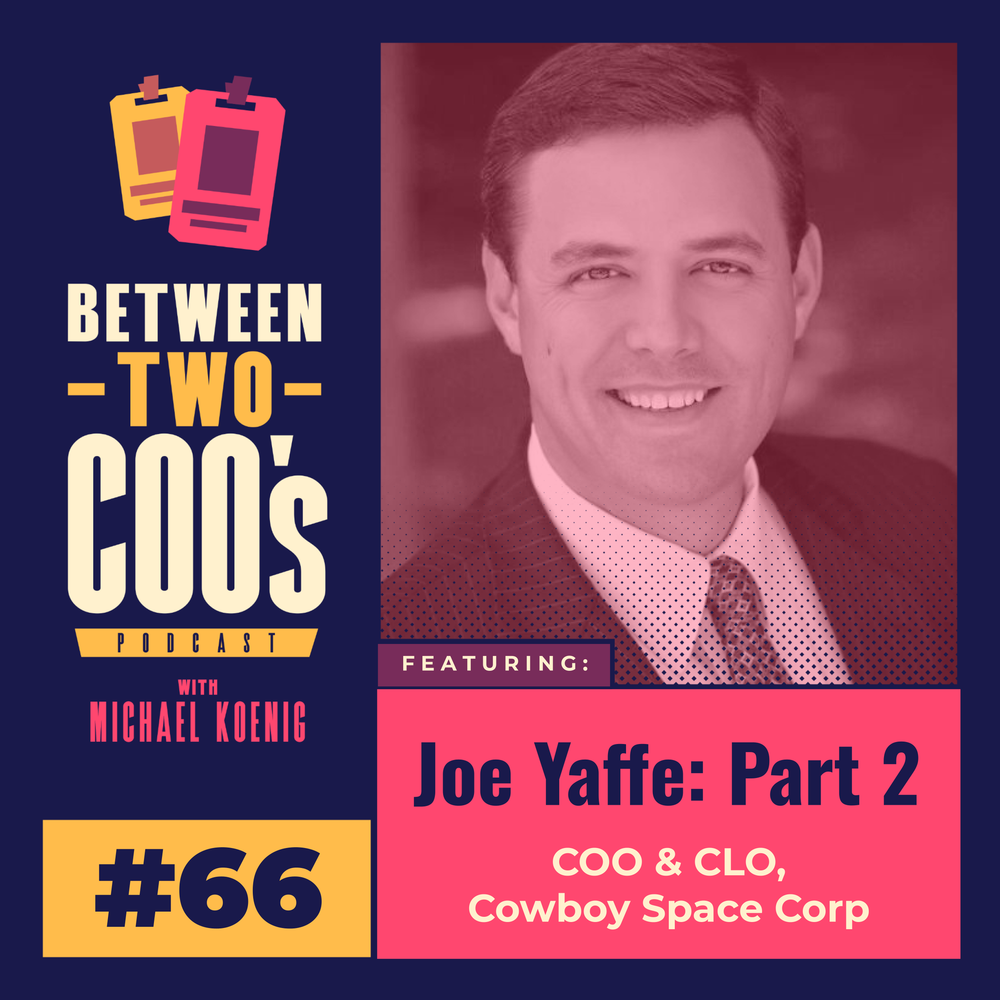
In part 1, Joe Yaffe explained how you put a data center in orbit. This conversation asks the harder question, which is whether it earns its keep.
Yaffe is COO and chief legal officer at Cowboy Space. The standard he holds the company to is blunt. Compute from orbit has to cost the same or less than compute from a data center on the ground, measured per GPU hour. If it does not, he says, it is a science project, and they are not interested in building one.
What follows is the part most space coverage skips. The money, the failure tolerance, the seven year permitting queue they are trying to route around, the agencies nobody expects, and the problem he ranks above all of it.
Topics Covered
- Everything that has to be true (1:10)
- The only test that matters (2:38)
- Why most space startups aren't asking if it's a business (4:14)
- The architecture that closes the economics (5:48)
- The money (10:01)
- Only one company launches heavy lift at cadence (11:54)
- A rocket engine tuned to the edge of failure (14:39)
- Being your own only customer (16:12)
- Why AI demand isn't slowing (17:06)
- Chips you can never swap out (19:05)
- Power beaming, revisited (21:47)
- Redundancy with no technician (23:51)
- Who regulates a data center in space (25:33)
- Why hiring is at the top of the list (29:19)
- December 2028 (31:19)
- It's inevitable (33:22)
- The 10 and 20 year horizon (33:41)
About Joe Yaffe
Joe Yaffe is COO and chief legal officer at Cowboy Space, which is building data centers that run in orbit. He spent 31 years practicing law in Silicon Valley, fifteen of them at Latham & Watkins and the rest at Skadden, where he was managing partner of the Palo Alto office. He studied ancient Greek in college and describes himself as the liberal arts guy in a building full of engineers.
Frequently Asked Questions
How does Cowboy Space decide whether an orbital data center is worth building?
By cost per GPU hour. COO Joe Yaffe says the end customer has to be indifferent to whether the compute comes from orbit or from a terrestrial data center down the street, and that indifference is primarily about cost. He notes most others in the category measure themselves in dollars per kilowatt hour, and that Cowboy Space deliberately does not.
Are data centers in space cheaper than on Earth?
That is the test Cowboy Space holds itself to rather than a settled fact. Yaffe says the business only makes sense if they can deliver AI compute at or below the comparable terrestrial rate, measured hourly per GPU. He says he is confident their architecture gets there, and that if it did not, the company would be a science project rather than a business.
Why does Cowboy Space measure differently from other space companies?
Yaffe's view is that the space industry is relatively nascent outside a few large players, and that many new entrants are run by brilliant technologists who are not focused on whether the thing works as a business. He is careful to say this is not a criticism, since that work is what pushes the technology forward.
How much has Cowboy Space raised, and is it enough?
Three hundred and sixty five million dollars, seeded by founder Baiju Bhatt with outside investors following. Yaffe says plainly that it will cost more than that, and that standing up manufacturing in Seattle and a larger facility outside California will require additional capital.
Why is fundraising not near the top of his worry list?
Yaffe says he has a thousand most important things on his plate and that attracting capital does not make his top ten concerns. He attributes that to Baiju Bhatt's track record with Robinhood and to the technical team the company has assembled.
What has to go right for Cowboy Space to raise the next round?
Yaffe frames it as a bet that the world will not remain one where only SpaceX operates heavy lift launch at cadence. He names Rocket Lab, Stoke Space and Impulse Space as strong programs that are not yet launching at the frequency he believes the segment requires, and says the industry needs expanded launch infrastructure and more pads.
Why is a rocket engine designed close to failure?
Yaffe relays it from the head of their rocket program. The perfect engine operates right on the balance point between failure and success, because you want maximum efficiency from it. The difference between the two sides of that line is a catastrophic meltdown or every kilogram reaching orbit.
How does being your own only customer change the risk?
Cowboy Space carries no third party payloads, so a failure does not destroy another company's satellite or their commitments to their own customers. Yaffe says that means a failure does not set them back the way it would a launch provider, and they can keep iterating at cadence.
How long do the chips last if you cannot reach them?
Cowboy Space models a six year useful life for the GPUs, and Yaffe says the economics remain profitable even accounting for performance degrading over that period. The satellites are eventually demised, either burning up on re-entry, sent into the sun, or otherwise de-orbited.
How long does it take to build a data center on the ground?
Yaffe cites roughly seven years for a large data center in Northern Virginia, and says it takes longer overseas. He adds that the current political climate is running against new large scale AI data centers, which widens the gap that an orbital approach is trying to exploit.
Is space based solar power back on the table?
Yaffe says interest in the original power beaming program has rekindled, much of it from government. He corrects a common misreading: beaming power is inefficient one satellite at a time, but at scale with a large constellation it can accomplish a great deal. The obstacle is that scale means billions in infrastructure, and terrestrial solar remains the cheapest energy there is.
Who regulates a data center in space?
No single agency. Yaffe lists the FCC for Earth to satellite communication, the FAA for launch, the FDA for laser devices because of its history with things like LASIK, NASA and the Space Force plus state bodies for launch sites, the NTIA for deconfliction with government satellites, and NOAA for sensor interference. He adds unresolved questions on data privacy and export control.
What happens when a chip fails in orbit with no technician?
Yaffe says a lot of those problems have software solutions, principally routing work to other GPUs on the system. Physically, Cowboy Space over-provisions each vehicle, packing more GPUs than the solar arrays can power at once, so the answer is rerouting rather than hot swapping a rack.
What is the hardest problem at Cowboy Space right now?
Talent. Yaffe says hiring and the labor market sit at the very top of his list, ahead of capital and regulation. The pool of people with relevant experience is small, the job is round the clock, and the company is on a roadmap to hire hundreds of people against a December 2028 launch date.
Mentioned in This Episode
Listen & Subscribe
Apple Podcasts · Spotify · YouTube · Newsletter
About Between Two COO's
Michael Koenig · betweentwocoos.com · b2coos.com
Building Helm · helmapp.ai
Full Transcript
Show full transcript
Joe Yaffe: The difference between failure and success means catastrophic meltdown and explosion, or it launches every kilogram to orbit as efficiently as possible. It doesn't set us back for the same period of time because we've only got one customer, which is ourselves, so we can iterate, iterate with speed, in other words. And the current wait time for a large data center, for example, in northern Virginia, where a lot of these things are, is, you know, seven years. The thing that's at the very tippy top of my list right now is talent. It's hiring. It's the labor market, and that's before you get into what we're not really doing, which is interplanetary travel and getting human beings on the surface of Mars and building retirement homes on the moon.
Michael Koenig: Welcome back to Between Two COOs. This is part two with Joe Yaffe, COO and Chief Legal Officer at Cowboy Space. Last time, Joe walked us through the leap: three decades as a top Silicon Valley lawyer, and then he jumps out of the plane and helps build data centers that run in orbit. If you missed it, go back and listen, we'll drop a show note, because it's one of my favorite episodes to date. Today, we go up to orbit and ask the harder questions: Can this actually work, not as a science project, but as a business? Joe, welcome back.
Joe Yaffe: Thanks for having me. Nice to see you again.
Michael Koenig: Absolutely. Now, before we get into the money, let me set the table for anyone joining us here. Here's where I've landed in terms of the whole category of data centers in space. A year ago it was kind of filed as impossible. Now it's filed under potentially no longer crazy, and that's enormous progress in a short amount of time. But let me just say out loud what has to be true for this to actually work. It's something that you took us through last time, and I think it's worth kind of reiterating here, because it's a list. So, you have to get the data center into orbit, which means you have to get the cost of throwing a kilogram into orbit to drop by about 10 times. You have to build your own rockets to do that because Space Cowboy is vertically integrated, and that's from scratch, which normally takes a company a decade and a couple billion dollars. And you have to put the most advanced chips we make into the most hostile place we know of, letting them get hammered by radiation for years with nobody to go up and fix them. You have to get rid of all of the heat from a megawatt of computers using basically nothing but glowing into the dark. No air, no water, just physics. Then you have to get all of that data back down to Earth, and you've got to do it all in a timetable to rival that of SpaceX, who has a 15, 20 year head start and deep pockets. So Joe, that's my list. You're pushing on the actual laws of physics here. Is that the whole list? Did I leave anything off?
Joe Yaffe: That's a pretty good list. I mean, there are probably other complexities there, and to be honest, that rendition kind of makes me just want to go back to work, so maybe we should sign off now. One minor clarification. The operating principle for the company is that if you look at what we're providing, which is AI compute, it only makes sense because the end compute user needs to be indifferent as to whether that compute comes from outer space or whether it comes from a terrestrial data center, you know, down the street or five hundred miles away. And they need to be agnostic primarily from a cost perspective. So a grounding principle for everything we're doing is that this only makes sense if we can provide AI compute on a cost basis, which we measure as a GPU hourly rate. So how much it would cost to actually generate compute on a GPU for an hour that is at or less than what the comparable terrestrial rate is. And so that's what we're orienting towards. And I say that because a lot of other folks who are talking about orbital data centers are focused on the cost of energy in space and focusing on dollars per kilowatt hour. Our thesis is a little bit different, a lot of it derived from the fact that, you know, Baiju was very much a business-driven entrepreneur, as am I, and so we're focusing on that. And we're confident that our architecture gets us to an hourly GPU cost that is competitive with the cheapest form of AI compute on the ground.
Michael Koenig: Why are you looking at this differently than the other competitors out there?
Joe Yaffe: Well, I think one is, and this is something I've observed in my time working in the space industry, is that the space industry, other than a few very large players and some legacy prime contractors, is a relatively nascent industry. There are a lot of new entrants in the business. And to be candid, I think not a lot of them have the same experience, whether it's 31 years in large law firms or building a company like Robinhood, and what it actually takes to build a sustainable business. And that's not a criticism, because there's an awful lot of new technology development that has to happen. There's a lot of hard science. And a lot of newer companies are started and run by folks who are brilliant technologists, but maybe they're not as focused on, is this going to work as a business? And that's actually a positive thing in some respects, because you need to have those folks in the industry in order to propel the technology forward, to try new things, to develop new things. I would also say that a lot of the space business has been and currently is driven by government demand. There are a lot of missions that go into space based on the government. That's a somewhat different business model, just the way government contracts work, and I think a lot of players are focused on that. We're focused on servicing government mission needs, but primarily I would say we see the demand arising in the private sector. And so on that basis, we necessarily have to focus on what the economic cycle looks like for private sector customers.
Michael Koenig: So what's enabling your ability to be cost competitive with terrestrial GPU per hour prices?
Joe Yaffe: Yeah. It's kind of, I would call it the magic of the architecture and what we have realized. Let me start from another basic observation, which is that if you look at how commercial space has evolved, and really the space launch business as a whole, whether private sector or government, it's evolved so you have a first stage of a rocket and a second stage which carries payloads, which are usually, the vast majority of the time, smaller flat satellites that are packaged inside that second stage of the rocket. And then when that second stage is lifted into orbit, those satellites are dispensed from the second stage and spread out over low Earth orbit in a constellation of a large number of smaller satellites. That makes a lot of sense based on the primary use cases for government and commercial launch over the last two to three decades. Namely, if you look at what's dominated the commercial sector, it's been telecom satellites, Earth observation satellites, and government satellites doing other various things on behalf of our government. Those models are best served by having large constellations of smaller satellites that provide many to many coverage. If you think Starlink, if you think cable television being communicated through or telephone signals being communicated through satellite, it makes sense to have as much coverage across as much of the world as you possibly can. But if you're starting from the premise that what we want to do is build an orbital data center, you would approach it differently, which is how we approached it, and you would say that what matters most is actually to get as many densely compacted, highly interconnected GPUs into orbit in one package at the same time. When we look at it through that lens, having GPUs on a large number of smaller satellites packed inside a second stage and then getting dispensed isn't necessarily the way you would start. Which is why our architecture contemplates that the second stage of the rocket is the data center. So there's no dispensing of smaller satellites. That packaging efficiency by itself actually impacts the economic model significantly. When you couple it with the fact that, as we talked about before and as you just alluded to, one of the bigger challenges of operating GPUs in orbit or any silicon in orbit is cooling the chips because they run hot, and when there's no atmosphere, you can't cool them through convection. And so you necessarily need large metal radiators. By using the entire second stage of the rocket as one large radiator, we further improve the packaging efficiency because we're taking every kilogram of metal that we're taking into orbit, really every kilogram of mass, is itself being used in the service of providing this GPU compute. And then finally, when you're able to get more highly interconnected GPUs into one package into the second stage at one time, you're putting the revenue-producing part of the vehicle you're building into orbit with more revenue-producing parts in one package per launch at a single time. So you put all those things together, what you get is an efficiency which allows you to bring the cost of our GPU compute down. I should add one thing. The only other thing that is required for that really to be the case is you gotta control your own launch, which is why we made a decision to build our own launch vehicle. It's a unique kind of launch vehicle because it's being purpose-built for the sole purpose of delivering orbital data centers into orbit. It's not being built for missions to the Moon or missions to Mars or interplanetary travel or carrying humans or packing a large number of smaller flat satellites. So we don't have to engineer the second stage or the first stage lifting the second stage for the purpose of ensuring that large numbers of other customers with third-party payloads can integrate into that second stage. That streamlines a lot of the construction, a lot of the manufacturing, a lot of the design, and further makes this more cost-effective.
Michael Koenig: The vertical integration here is key. So let's start with the money. You raised three hundred and sixty-five million dollars. Baiju seeded it. Real investors came in. You're building these four companies at once. SpaceX has this giant lead. Blue Origin's been out there for quite some time. Rocket Lab, it's a rocket that's smaller than yours. It costs in the hundreds of millions and counting. And then on top of it, you have each one of the satellites carrying roughly eight hundred of the most advanced NVIDIA chips out there. So the payload alone has to be tens of millions per bird. The three hundred and sixty-five million that you've raised, I'm assuming buys the demo at this stage, and it seems like you're gonna need billions more to enact the vision. Aside from the successful demo, what has to go right for you to raise the much bigger round that this is gonna need?
Joe Yaffe: Yeah, I mean, it's gonna cost more than that, just to be blunt. Space is expensive.
Michael Koenig: Yeah.
Joe Yaffe: In order to stand up our various physical infrastructure facilities that we need, whether it's our rocket design and satellite design and light manufacturing facility which we're standing up in Seattle or a large scale manufacturing facility which we'll stand up somewhere outside of California, that is going to require additional capital infusion. A couple of things. For one thing, the industry as a whole is enjoying a period of time where there's a great deal of interest. I think one can look to the interest in the SpaceX IPO as a pretty clear indicator of that, number one. Number two, you take a look at what we're building, which is effectively a heavy lift launch vehicle, where another critical part of the business model is that we're intending this to launch at cadence, meaning launch frequently to get more GPUs up more quickly to provide more AI compute to people on the ground. There really is only one current, US at least, really worldwide, heavy lift launch operator operating at cadence, and that's SpaceX. And so I guess you could phrase it as the one thing that needs to go right, or the way we look at it is that it's hard for us to imagine a world in which there will only be a single launch provider operating heavy lift launch at cadence. There are other launch providers that are great companies. You mentioned Rocket Lab. Stoke Space is another one. Impulse Space is doing super interesting stuff, great company. The others have very strong developed programs but the history has shown they're not really launching at the cadence that we think is required to take this economy, this industrial segment into the next generation, which is part of what we're doing. That's a challenge. That requires expanded launch infrastructure across the country, more launch pads, and it's gonna require greater capital. But once we're up and running, and once we have our first launch, we're highly confident that the economics work out such that financing this is not going to be the issue. I tell people I've got, and I'd probably use this line with you, I have 1,000 most important things on my plate to deal with. I would say that attracting and raising capital is really, really important to us, but not at the top 10 of my list of things to worry about. And that has a lot to do with the fact the company was founded by Baiju Bhatt, and he's got an incredible track record, investors know that. He's, to be candid, just generated a lot of great returns for folks who bet on him and Robinhood. And we've assembled an incredible technical team, and when we roll out the folks who have joined us over the course of a relatively short period of time, they're, without exaggeration, the world's best rocket engineers and the world's best satellite designers. And that's the type of folks we're attracting because there aren't that many opportunities out there like this, to start with a company, to build something from a blank sheet of paper that's their program, where the whole purpose is to do it quickly and to rely only on ourselves for our payloads. We're not out there trying to sell space to a bunch of satellite manufacturers.
Michael Koenig: I can't help but think back to all of the videos of the failed launches that SpaceX had. There was this fast cadence of iterating, learning from the failures. How do you plan for that? Because SpaceX is carrying payloads up, whereas your payload is built into the rocket. How do you think about those learning moments where things may not go according to plan?
Joe Yaffe: It's a great question, and one of the things that actually the head of our rocket program, he and I were chatting a couple weeks ago, and he said something which I hadn't thought of, but it makes sense, which is that the perfect rocket engine is designed to operate right on the balance point of failure and success. Because you want to get as much efficiency out of that rocket as possible. And now the difference between failure and success means catastrophic meltdown and explosion, or it launches every kilogram to orbit as efficiently as possible. And so the business and the engineering in and of itself is always gonna be right on that precipice of potential catastrophe. That being said, one thing that's interesting about what we're doing is that when you're not designing a rocket to take, for example, government payloads, sensitive government satellites or third-party payloads where they've invested a ton of their own capital into designing their satellites for whatever purpose they are, and they've got their own customers to whom they're gonna be selling services from those satellites. You need to be very, very sure that you're not gonna blow their stuff up.
Michael Koenig: Mm-hmm.
Joe Yaffe: Our dynamic is fundamentally different in that we don't want to blow up our own payload for sure. But frankly, assuming continued voracious demand for AI compute, we have a different risk spectrum. If we make this work one time, then we can replicate that and make it work multiple times. If along the way accidents happen or there's a failure along the way, it doesn't set us back for the same period of time because we've only got one customer, which is ourselves, in terms of actually getting those GPUs into orbit. And so we can continue to work at cadence and not abandon the project because we've either run out of capital or run out of faith that we're gonna be able to continue to develop the rocket program. So we can iterate at speed, in other words.
Michael Koenig: Let's talk about the assumption that you just named, which is the continued voracious demand for compute for AI. People in the space who are close to it are saying there will be no letup in this demand, it will grow. Obviously you all are long on this, so how do you think about that internally?
Joe Yaffe: The expected capital expenditure for AI infrastructure is the largest infrastructure build-out in the history of humankind, right? So we're talking about six, seven trillion dollars, much of which you can't pick up the paper without reading about, large scale, gigawatt scale terrestrial data centers that are five, seven, 10 years out from even being online, and folks are investing hundreds of billions of dollars in developing that. So that's a pretty clear signal that this demand is gonna be continuing for a while, because those are long-term deals that are being inked right now, number one. Number two is that one of the ways that we think about this as well is that in comparison to the cost of developing a terrestrial data center, let's say a hundred billion dollar gigawatt data center that you're gonna build somewhere and worry about connecting to the grid and having to potentially power yourself and paying for large turbines. In our particular case, the capital investment in order to get the rocket program and the satellite designed and built, the rocket program up and running and launched, is actually quite small in comparison. Which is one of the reasons, and a compelling reason for why we're attracting capital the way we've been able to attract capital I think, is that as crazy as it sounds, placing a two billion dollar bet in the context of the current infrastructure expense that's going on across the globe is a relatively small bet. Now, I don't think I would've ever said that five, 10 years ago for sure. But that's just the world we live in.
Michael Koenig: That's very well said. And now after talking to you, I am a believer.
Joe Yaffe: Oh, good. You got one.
Michael Koenig: I came into this fascinated and I continue to be. Here's one of the things that's been nagging me though since we talked. A top AI chip run hard lasts maybe two to three years on Earth, where you can walk into the building and swap it. And there's a trick with the big data centers that when a chip gets old, they cascade it down to cheaper, lighter work instead of throwing it out. Now, you're putting those chips somewhere you can't reach. So in a sense, the satellite will outlive the silicon inside it. I'd love to understand how you all think about that gap between how long the hardware is really valuable and how long the thing you launch stays up there. Is the answer that you launch often enough that it just stops mattering?
Joe Yaffe: Yes. That's a very succinct way of putting it. All of our economic modeling assumes a six-year useful life of the GPUs.
Michael Koenig: Mm-hmm.
Joe Yaffe: And you're right, I mean, the performance will degrade over time, and so the unit cost economics that we analyze take into consideration the fact that the power of the GPU or the ability to run high-performance compute jobs in orbit is going to change and degrade over time. And it's still immensely profitable, to be candid, even on that basis. But the answer to this is, in exchange for having satellites that will be demised, meaning they will either burn up on re-entry into the atmosphere together with all these chips that have outlived their useful life, six to 10 years after launch, or be blasted into the sun or otherwise de-orbited in some other way. In exchange, what we're able to do is get frontier GPUs off of the assembly line, integrated and into orbit on a much faster scale. Because in order to get those same GPUs up and running in a terrestrial data center requires the construction and the permitting and overcoming regulatory hurdles of building large scale terrestrial data centers, which, yes, you can swap racks in and out of them, but only after they're built. And the current wait time for a large data center, for example, in Northern Virginia, where a lot of these things are, is seven years. It's even longer overseas to get something up and running. And the current political climate, which I don't think should be understated, is running the other direction against the development of new large scale AI data centers. So in a perfect world, we would recover those GPUs, we could bring them back to earth. There are a lot of great reasons why we'd love to be able to do that. But again, sort of the trade-off is we're able to give compute users access to frontier GPUs at scale much more quickly, effectively turning a terrestrial real estate and permitting and development process into an industrial manufacturing process.
Michael Koenig: So I actually was thinking even further beyond this, and it comes back to the original mission of this company, which was to actually use the solar array and the structure and the optical system to pass that energy back to Earth. Now, we talked previously about the evolution of that and how it wasn't really a feasible thing to do in an efficient way. And then I was thinking about, you're gonna have this asset that's up there that still has some life in it. Is there a way to repurpose it and perhaps beam power to other things in orbit?
Joe Yaffe: Yeah, and that's actually since you and I spoke, I think there's been a little bit of change in the environment in terms of that. I think the interest in our original space-based power beaming program has rekindled a bit, across different domains, a lot of them the government. And so there is a very real world in which the larger scale vision that we always dreamed of when we started the company, which is to have combined power and compute so that at scale you could provide AI compute and ground receivers to receive that compute, all in one package to completely change the relationship that we have between Earth and energy. Now that's looking like it may be more in the art of the possible on a shorter timeframe. It was always kind of still the long-term goal because, just to correct what you said, space-based power beaming is inefficient on a one-off basis. You have so much loss of efficiency by beaming power into the atmosphere. At scale, with a very large constellation, you can actually accomplish quite a bit. It's just that that's a much more challenging business because by at scale, I mean billions of dollars of space infrastructure in order to have a constellation large enough to provide power on demand continuously across different parts of the globe is a challenging thing to do and have it be cost effective with terrestrial power. Because solar power, even on the ground, is still the cheapest source of energy there is.
Michael Koenig: Right. Thank you for correcting me. I do have a question about redundancy. Anyone who's ever run servers knows that stuff fails constantly, and I've run a couple of data centers. The big AI clusters on Earth lose a chip every few hours, and the fix is beautifully boring. A technician walks in and swaps it out. You don't have that technician. How does redundancy actually work up there? If a part of one of the satellites dies in the middle of a customer's job, what happens? Does the work jump to another satellite? Does it fall back to Earth? I'm just thinking about all of the possible catastrophes that could happen in space. How do you think about that?
Joe Yaffe: Well, I think we worry about them. We try to identify them. We're hard at work on trying to address some of them. A couple of simplistic things off the top. A lot of those problems have software-based solutions, routing traffic to other GPUs on the system. I think more physically, we actually have the ability to over-provision each of these satellites. When we talk about each of our vehicles having a megawatt of compute power, that's the power available based on the solar arrays being flown into space. We have plenty of space to pack many additional GPUs onto the same vehicle. And so not necessarily hot swapping a rack, but rerouting to GPUs that aren't impacted by whatever's affecting the resilience issues in orbit, is something that we're engineering around right now.
Michael Koenig: You mentioned regulatory and permitting. You're the lawyer in the room. An orbital data center, it's kind of a strange animal here. It's not really a launch. It's not really a communication satellite. It's not really an Earth imaging satellite. So who actually regulates it?
Joe Yaffe: Yeah. Now you're getting to one of the thousand things that are the most important things on my plate. It's a very complex and not very wieldy, to be blunt, regulatory environment. So right now there's kind of a loosely aggregated collection of agencies responsible for regulating activities in space. The FCC is a critical piece of that. They're responsible for regulating communication between Earth and the satellite. The FAA is responsible for getting you your launch permit and getting your ability to clear the space from the ground to the upper atmosphere. They don't have jurisdiction once you're out of the atmosphere. The FDA, interestingly enough, currently has some regulatory authority over laser devices. Things like LASIK and other things that the FDA's historically been responsible for. You've got the governmental agencies that run and control the launch sites. So you've got NASA and the Space Force, together with some state municipalities like Space Florida and others, who are responsible for managing and administering those locations. And then you've got a host of other folks who are very interested in making sure that commercial space activity doesn't conflict with governmental space activity. So an organization called the NTIA, which kind of works as the overseer of interaction between satellite communication with government satellites in orbit and other activities. You've got a whole bunch of folks who are interested on the government side in use of lasers, either in space or from space to ground, to make sure that you're deconflicting with operations on the ground. And that's just sort of the tip of the iceberg. You've got environmental folks. You've got NOAA interested in making sure that you're not interfering with their own sensors. So part of what I'm doing is both navigating that immense regulatory landscape and frankly working actively, and it's been very promising, with senior folks at all of those agencies to come up with a more streamlined approach for commercial space at large. And the head of the space bureau at the FCC is terrific. The current chairman of the FCC, Brendan Carr, is terrific. They kind of see the need to catch up on the regulatory front, given their very large role in the regulatory framework overall. They've introduced space modernization proposals, which we commented on and assisted with, which we're fully supportive of. So I think it's gonna change, but that's a big rock to be moving, to get people, because a lot of people are concerned, and there are a whole bunch of unknowns when it comes to operating data centers in space that deal with data privacy and historical rules that are very well developed that govern data privacy rights for data that's moving around and is in place on the ground, but not necessarily in orbit. You've got export control issues. So there's a reason why I think Baiju and I decided that it'd be helpful to have a lawyer in one of the senior spots here.
Michael Koenig: Well, that's what I was gonna say. This is why you put a lawyer as a COO of this company. You mentioned that is one of the 1,000 things on your list. What are some of the others? What does your priority list look like? I can't even imagine at this point.
Joe Yaffe: So, interestingly, the thing that's at the very tippy-top of my list right now is talent. It's hiring. It's the labor market. Because this is an incredibly robust part of the overall economy right now, whether you call it deep tech or aerospace, space, AI. There are a lot of opportunities up and down the chain from entry level all the way through to very senior folks. It's also a relatively small slice of the overall labor pool, and folks with the experience that we need, and who have kind of what it takes to come into a two-year-old startup and what really is a round the clock job that requires a lot of passion, finding those people is a full-time job. So I'm spending everything from a ton of my time just trying to hire more in-house recruiters to streamlining our recruiting process, to working the referral system, and it just takes time. And there's nothing fancy about any of that. It's just hiring, because we're on a roadmap to hire hundreds of people over the next very, very short period of time. By the way, a little shout-out for entry-level people. It's an incredible career path right now. People who are worried about the economy, if I could go back in time and tell my kids, go be an aerospace engineer, I probably would. They're well-paying jobs that are fascinating, and they're fun, and you get to do cool stuff. You're not sitting in a cubicle working on somebody else's bookkeeping ledger. And I think that's only gonna grow, which gets me super excited. It's actually gratifying to be part of that development of those opportunities for the next generation of folks getting into the space business.
Michael Koenig: So we've got hiring, we've got the regulatory aspects to this. With such an intricate operation with so many different moving parts, what does the operating cadence of the business look like? How are you actually operating this thing? What's the operating system?
Joe Yaffe: Now keep in mind, this is supposed to be my retirement, right? I retired from Skadden. So if you're looking at a spectrum of whatever you would think of as retirement and what I'm doing now, they're at two completely different ends. Yeah, look, the cadence is kind of round the clock. And a lot of that is because it's clock-driven. I told somebody the other day that if I had 25 years to get done what we're getting done, this would be a very luxurious job. It would feel like retirement. But we don't. We're trying to get all this done in two and a half years. We are on a roadmap, on a timeline, to launch what we call mega, our one megawatt compute data center, in December of 2028. To get there means we have to run full speed ahead, which is why hiring is at the top of the pyramid. Bringing people in, bringing talented folks in, getting them organized, all rowing in the same direction. And a lot of things in this business have hard deadlines. The legal business has some hard deadlines when you're working on an M&A transaction. But the truth of the matter is there are relatively fewer hard deadlines, like if you don't hit this 30-day clock, everything falls apart, and things slip all the time. Here, you've got launch windows, you've got a set period of time within which you can test different components or test the integrated satellite, and if you miss that test, you're gonna be pushed back another week because you're simply not gonna be able to do it. So all of those things require that folks put in an ungodly amount of time, which is part of what we scan for when we're looking for people to come on board. The payoff is that it's mission-driven. So once you get to the end, like mission accomplished, you see it. What I haven't told them is that the next day they get to come back and work on the next mission. But we're all driving towards the first mission.
Michael Koenig: Joe, I really appreciate your time. I feel like I have a better understanding, and I hope listeners do too, that this can actually work and that this is physically possible.
Joe Yaffe: It's inevitable. I mean, it really is inevitable. There's no chance that humanity is gonna restrain itself to operating simply on the planet's surface.
Michael Koenig: Mm-hmm.
Joe Yaffe: I think people are starting to see that. It's been brought into the public consciousness, and AI, I think, is the catalyst for this business for sure, and I think it's only just gonna grow from there.
Michael Koenig: I recently published a podcast with Rick Marini, who is the former COO of Grindr. Rick was experienced as a CEO and then realized he's a really great COO instead. He described the difference as a CEO looks on the 10-year time horizon, whereas a COO looks on the two-year time horizon. I'm wondering, because as you mentioned, Baiju is a visionary in so many different ways, what's he thinking in a 10-year, 20-year time horizon here?
Joe Yaffe: I don't wanna put myself in Baiju's head, but I will tell you, we have thought about what the 10 and 20-year horizon looks like, and I think it means a very robust commercial economy in space, spurred in large part by the power of capitalism, which we wanna be a part of. I think longer term you are talking about actual permanent activity, including commercial activity on the lunar surface. I think you're talking probably more practically about quantum computing in space. Space is the right place to do large scale quantum computing. I think quantum computing, which almost nobody actually understands, is a very real thing that is going to become a much bigger and bigger topic of conversation. We see ourselves being heavily involved in that as time goes by. There's a whole world of people actually constructing and manufacturing things in orbit through what they call ISAM, in-space assembly and manufacturing. And so I think that's a world that we could see developing over the next 10 to 20 years. All that stuff is on the horizon. And that's before you get into what we're not really doing, which is interplanetary travel and getting human beings on the surface of Mars and building retirement homes on the moon.
Michael Koenig: And building that in-house knowledge of how to actually launch things into space, it seems like you all are positioned well for what the next stage of the space economy will be. Well, Joe, thanks so much for joining me. I really appreciate it. And a big thank you to you all for listening. Check out Cowboy Space. We'll leave a link in the show notes, and make sure you keep up with Joe and the incredible work he's doing. See you next time, folks.
Joe Yaffe: Thanks, Mike. Good one.
More on AI

The COO's Execution Playbook
Frameworks, templates, and hard-won lessons from operators who've been in the chair. Every Tuesday.
No spam. Unsubscribe anytime.