Joe Yaffe, COO at Cowboy Space, on Building Data Centers in Space (Part 1)
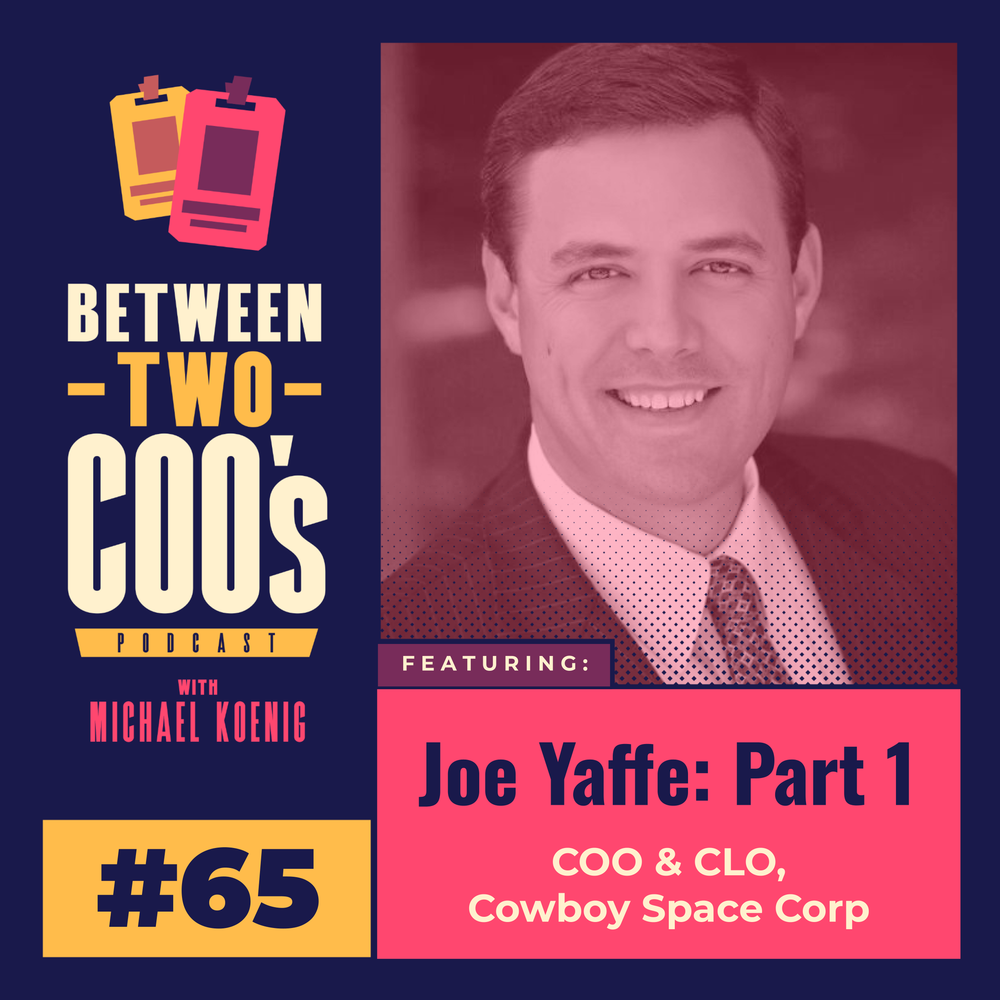
Joe Yaffe had climbed as high as the ladder goes. Fifteen years at Latham & Watkins, then Skadden, managing partner of the Palo Alto office, 31 years advising founders and CEOs as their personal counsel. By his own account, his idea of a midlife crisis was moving from one mega law firm to another.
Then Baiju Bhatt, the Robinhood co-founder he had worked with for years, stepped away from his day to day role. Joe asked what was next. Baiju said space lasers. Two years of convincing his wife later, Joe left to become an operator.
Part 1 covers the leap and then the explainer. Joe walks through how an orbital data center actually works, why the second stage of the rocket becomes both the computer and the radiator that cools it, and why none of it requires new science. Part 2 takes on the harder question of whether it works as a business.
Topics Covered
- Space lasers, and a lawyer who said yes (0:00)
- Thirty one years, and a small midlife crisis (2:27)
- I thought I would die at my desk (5:13)
- What twenty years beside founders teaches you (7:32)
- Second grade lawyering (11:46)
- One way doors and two way doors (14:33)
- Zero to rocket science in a year (18:13)
- How Cowboy Space works, in plain English (29:29)
- Asimov wrote about this in the 1940s (31:05)
- Turning the second stage into the data center (35:27)
- The radiator epiphany (36:30)
- Why they build their own rocket (39:29)
- We're not breaking any laws of physics (45:54)
- Nuclear reactors on the moon (50:37)
About Joe Yaffe
Joe Yaffe is COO and chief legal officer at Cowboy Space, which is building data centers that run in orbit. He spent 31 years practicing law in Silicon Valley, fifteen of them at Latham & Watkins and the rest at Skadden, where he was managing partner of the Palo Alto office. Across those years he advised thousands of founders, CEOs, and high net worth individuals as their personal counsel, which is how he met Baiju Bhatt. He studied ancient Greek in college and describes himself as the liberal arts guy in a building full of engineers.
Frequently Asked Questions
What is Cowboy Space building?
Cowboy Space is building data centers in space. Rather than launching satellites that carry GPUs, the company keeps the second stage of its own rocket in orbit and turns that vehicle into the data center itself. COO Joe Yaffe describes the goal as providing AI compute at or below what the same compute costs on Earth.
Why put a data center in orbit at all?
Joe says the single biggest energy problem on Earth right now is powering demand for AI compute. An orbital data center is off the grid entirely, with no water use, no grid connection, and no terrestrial real estate or zoning. It also turns a permitting and construction process that takes five to seven years into an industrial manufacturing process measured in weeks.
What was Cowboy Space called before?
The company was originally called Aetherflux. It was founded to build a constellation of satellites that would collect solar power in low Earth orbit and beam it to Earth by laser. It was later renamed Cowboy Space Corporation, and its core values are all tied to Western themes. One of them is be careful with the rations.
Who founded Cowboy Space?
Baiju Bhatt, co-founder and former co-CEO of Robinhood. Joe Yaffe worked with him as outside counsel for years before joining. Joe notes that although Baiju is known publicly for fintech, his background is in math and physics and he grew up in a math family.
How do you cool a data center in space?
There is no atmosphere, so convection is not available. Heat has to be radiated away, and the amount of metal required is fixed by the Stefan-Boltzmann equation. Cowboy Space keeps the second stage in orbit and unfurls giant sheets of metal from it that serve as the radiator, so the same mass does double duty as both the data center and the cooling system.
Does an orbital data center require new physics?
No. Joe is direct about this. He calls it a pure engineering and execution challenge and says they are not breaking any laws of physics. The underlying science has been understood for decades. What changed is the cost of reaching orbit and the maturity of the pointing and tracking technology.
What is space based solar power and how does Cowboy Space use it?
Space based solar power means collecting sunlight in orbit, where it is roughly ten times more powerful than at the surface, and sending that energy to Earth. Cowboy Space plans to demonstrate it in October by beaming power from orbit to a ground station about fifteen meters wide using an infrared laser. The same pointing and tracking system becomes the backbone of the optical data link for the orbital data center.
Who first wrote about beaming power from space?
The idea is old. The Department of Energy wrote about it in the 1970s, and Isaac Asimov published a short story on it called Reason in the 1940s. Joe points to that history to make the case that the concept is settled and execution is the new part.
Why is Cowboy Space building its own rocket?
Joe gives three reasons. The payload is about 22,000 kilograms, which needs a capable vehicle. Buying launch means paying another provider a margin and depending on their capacity. And designing a bespoke rocket for a single payload streamlines the engineering, because it never has to accommodate third party satellites.
How much compute does each launch put into orbit?
Joe says each rocket puts roughly a megawatt of compute into orbit, which works out to about 792 GPUs depending on the chipset.
Why did Joe Yaffe leave a law career to join a space company?
He was managing partner of Skadden's Palo Alto office and expected to finish his career there. When Baiju Bhatt described the idea, Joe blurted out that if it happened he would come along. It then took two years of discussion with his wife. He frames the decision as embracing fear rather than avoiding it, and says the plunge itself is the rewarding part.
What is a one way door decision?
Joe uses it to describe a decision that, once made, materially changes your timing, your cost of operating, or the company's strategic trajectory. His example is real estate. Choosing whether to open a large factory in Southern California or somewhere else is a decision that will shape the next 200 hires the company makes.
How did Joe Yaffe learn rocket science without an engineering background?
He credits curiosity, a lot of lost sleep, and a willingness to ask basic questions in technical meetings. He read optics, rocketry, and space law textbooks and holds standing meetings with the heads of the rocketry and software programs. His rule with engineers is that if they cannot explain it to him, he is not confident they understand it themselves.
Mentioned in This Episode
- Cowboy Space
- I, Robot by Isaac Asimov, which collects Reason, the 1941 short story on beaming power from orbit
Listen & Subscribe
Apple Podcasts · Spotify · YouTube · Newsletter
About Between Two COO's
Michael Koenig · betweentwocoos.com · b2coos.com
Building Helm · helmapp.ai
Full Transcript
Show full transcript
Joe Yaffe: I was again, super happy. I thought I would die at my desk at Skadden. He said, "Oh, I'm thinking about building space lasers." And I sort of sat up a little bit straighter and I, I said, "Okay, you're gonna have to explain this one." And I blurted out. I said, "And if you do it, I'll come join you." That's when he sat up straight and he said, "Really?" I said, "Yes. There are eight billion people on the planet. I'm gonna go find the other seven billion who think it's a great idea." And they move on. Just jump in, take the plunge. The plunge in and of itself is the most rewarding part because you realize you can do it.
Michael Koenig: Welcome to Between Two COOs. I'm your host, Michael Koenig. And every so often, the future shows up early. I felt it the first time when I pulled a slab of glass out of my pocket and held the accumulated knowledge of humanity in my hand. I felt it when I talked into my watch and it actually answered me. I felt it watching SpaceX land and catch a rocket falling back from space. And I feel it now with AI, which is becoming everything we imagined it would be. And so my guest today sits right at the seam of those last two, rockets and AI. Joe Yaffe is the chief operating officer and chief legal officer at Cowboy Space, where he's building data centers that run in orbit. He spent three decades as one of the top governance and transaction lawyers in Silicon Valley, ran Skadden's Palo Alto office, and then did the thing most people only think about. He left to become an operator. Joe, welcome.
Joe Yaffe: Thank you. Nice to be here.
Michael Koenig: Well, this is really two conversations. First, I wanna talk about your path, the jump you made, what you learned, and how anyone listening could make a jump like it. And then I wanna get into the sheer audacity of what you're actually building up there in space. Sound good?
Joe Yaffe: Audacity and insanity are, are very close to each other, so yes, let's get into
Michael Koenig: it. Such a fine line. Well, y- you told me that this wasn't on your bingo card three years ago, but that it had been building for a long time. Take me back to the version of you sitting across from the table from these world-famous founders thinking, "I can do this." Wh- when did that itch start?
Joe Yaffe: So it's, it's a great question. I mean, I loved being a lawyer. I came out of law school, uh, went right into a large law firm, started at a firm called Latham & Watkins, was there for 15 years. Moved across to Skadden, and that was, frankly, I thought my version of a midlife crisis, was moving from one mega law firm to another mega law firm. And I say that 'cause that gives you a sense of my level of risk tolerance for most of my career. But I was, I was fortunate in that I had a, a fairly unique legal career within a large law firm. I started out as a pension lawyer, um- Hmm ... 'cause I started out at a time when, frankly, they were laying people off from law firms, and it was a very safe and secure place to be. And then very quickly the practice morphed into a, a unique one where I was representing high net worth individuals and founders and CEOs, and really becoming their personal consiglieres. And I found that it was intensely rewarding, especially doing it in Sil- doing it in Silicon Valley, where I, I really got to get close with a lot of the movers and shakers and big thinkers that you've read about in headlines, and working with them, side by side with them on large deals, and on really everything personal. And it had the added benefit of, of giving me a lot of insight into their thought processes and their personalities and how they got to where they got to. That put me in the orbit of Baiju Bhatt, um, co-founder of Robinhood, co-CEO of Robinhood, and founder and CEO of this company originally called Aetherflux and now Cowboy Space Corporation. And that was a unique meeting. He-- I, I will tell you a story. You know, I would say of the thousands of clients that I worked with over 31 years, the vast majority I talked to on the phone and then, uh, you know, I was there when Zoom became a thing, started out as Skype, and then talked to them over video calls like this one. Baiju was one of the very first ones who, when he called and said would, would I be available to help him with something, he said, "I'll, I'll come in and meet you in person." And I was like, "Okay." And he was there two hours later, and he showed up in the office, and we hung out. And what was supposed to be a half an hour meet and greet for him to kick the tires on me turned into three hours of us really enjoying one another's company. That led to multiple years of working with him on a variety of things and a close friendship, including, you know, when he decided to step away from a day-to-day role at, at Robinhood. Um, and he called me, and I was, again, super happy. I thought I would die at my desk at Skadden. I was managing partner of the Palo Alto office. You know- Yep ... kids were out of the house. I had, I had climbed to the top of at least a small hill. I asked him, I said, "Well, what are you gonna do now? You just stepped away from Robinhood. Like, what are your plans?" He said, "Oh, I'm thinking about building space lasers." And I sort of sat up a little bit straighter and I, I said, "Okay, you're gonna have to explain this one." And he sent over a deck to me, which was the first kind of vision of, of then Aetherflux, which was to build a c- a constellation of satellites to collect solar power in low Earth orbit and beam it to Earth by laser. And the large vi- the big vision was build the first orbital energy grid to completely disrupt the relationship that we have on Earth with energy and make energy free and available across the entire planet. And to me, this was kind of mind-blowing, right? And I told him, I said, "First thing, you have to do this." Um, and I should mention, by the way, Baiju's background, he's kind of known as a finance bro with Robinhood, but his background is in math and physics, and he grew up in a- Yeah ... math family. So I said, "You gotta do this. This is gonna scratch this itch. It's huge. It's disruptive. If you can pull this off, it's gonna change, you know, the world for, for generations to come." And then- Sometimes things happen and you don't, uh, you d- you're not thinking when they happen, and I blurted out, I said, "And if you do it, I'll come join you." And he's, he's p- that's when he sat up straight and he said, "Really?" I said, "Yes." Now, in fairness, it then took two years of spousal negotiation 'cause my wife was
Michael Koenig: her,
Joe Yaffe: you know, basically, "What the fuck?" Um, this was not on her bingo card either. But I supported the company from the outside when he started it. They were a client of the firm's, and got them off and running, and so was building a foundation from the outside, and slowly got so much more enmeshed in the mission. And look, I'm a lawyer. I carefully evaluated the opportunity. You know, I, uh, the business plan, the economics- Mm-hmm ... you know, the fact that it's de-risked because it's, it was started by somebody who knows how to build a large company, and the fact that my role is kinda critical to what we're doing, which I'm happy to get into. There's a big role for somebody with a lot of legal and regulatory experience and project management experience and decent judgment. And he and I... But ultimately, I mean, he and I are best friends. It came down to us- Mm-hmm ... you know, wanting to do this together and my wanting to do it with him
Michael Koenig: It's fabulous. And w- well, y- you spent two decades representing founders and CEOs like Baiju, building this relationship. Uh, what did it teach you about how founders actually think that you couldn't have learned any other way? And then what surprised you once you were finally on the inside of it?
Joe Yaffe: Yeah, I... And I, I've actually tried to be somewhat methodical and take away the lessons from the founders that I've worked with, and I, I would say they all come in different shapes and sizes, so anybody who tells you, "They all do this," is, is not telling the truth. Like anybody else- Mm-hmm ... they've got different personalities and approaches. But there are some basic common denominators which I, I've tried to adopt myself, and I encourage others, you know, to really think about. And one is they are generally relentless. Like, these are people who y- are willing to engage in conflict and willing to ignore nos and maybes, and, and constantly reposition and redirect for a yes. And when they are confronted with adversity, they tend to take-- these highly successful operators tend to take that as, as simply data points and not associate it with an emotional reaction, which allows them to make decisions and respond in a much more efficient way, um, which is n- easier said than done, right? When people say, "That's a stupid idea," your natural reaction is to become defensive, to become adversarial. The folks that are super successful tend to say, "Okay, this person is in the box that they think it's a stupid idea. Let me see if there's any basis to what that position is. Maybe there's something I can take away from it." But otherwise- Mm ... there are eight billion people on the planet, I'm gonna go find the other seven billion who think it's a great idea, all right? And they move on. That's kind of the, a, a, a critical thing. I would say the other thing is these people are highly empathetic, meaning that they are, uh, really successful s- uh, founders, not across the board, and high net worth folks and, and successful executives. They're very, very good at, at understanding who they're speaking with and able to meet them at their level while conveying the important points that they're trying to get across, which is again- Mm ... I think a super valuable skill to constantly read empathy into your relationships with folks. And finally They're visionaries. I mean, the simple way of putting it, people talk about, you know, the reality distortion field that Steve Jobs used to establish. Yes. That is a very real thing. Um, you know, there were so many times where I felt like I was working with these people, uh, including Baiju, where I'm like, it's his world and I'm just lucky enough to kind of traipse along beside him because he's seeing it through a different lens with his own- Right set of rules and his own, you know, that he's living by. Um, and, and, and sort of that's the catalyst that allows them to make decisions, you know, without necessarily saying, "I'm gonna live by Mike's rules or Joe's rules. It's my set of rules." Within, to be clear, the bounds of actual rules like laws and regulations, but, you know, societal norms and that sort of thing.
Michael Koenig: Finding that fine line is really kind of, uh, r- interesting when you, when you see it, and not necessarily obvious.
Joe Yaffe: No. That's, uh, that's exactly right. It isn't necessarily obvious, and there are so many multiple times where I'd be in the midst of a complicated matter with someone where we had to make real judgment calls. And- Yeah ... my judgment would be, uh, you know, in one direction, and, and the judgment of my client would be in a completely different direction. A- and so often I, I had to pause and realize that I needed to pay attention to kind of their set of facts, their frame of reference, because their judgment was being formed from their perception of a reality which I just wasn't at, and I needed to get- Right there in order to, to understand where that judgment was coming from. That doesn't mean we would always, I was wrong and they were right. And- Mm-hmm ... actually I had to, often I found it, it helpful to adjust that, that perspective in order to then h- fine-tune the advice I was giving them, which is, you know, a subtle but important way, I think one of the reasons why my practice ended up being fairly successful.
Michael Koenig: Well, let's talk about that adjustment because you're, as an attorney, you're trained to spot and mitigate risk. I mean, it's in your DNA. And then you're working with these visionaries, and y- y- to, in your words, you have to get where they are. How do you balance that risk mitigation instinct with- The, uh, getting on board with what they're saying, and then also how do you maybe pull them back to reality?
Joe Yaffe: One of the things I learned early in my career as a lawyer is that there's an easy button for being a lawyer, and then there's- Mm-hmm ... a, a harder button. The easy button is to say no all the time. And not nec- not no in a simplistic way, but to say you come up with an idea and I say, "Well, here are all the reasons why it won't work. I've recited the law to you. I've done my job as a lawyer. I've told you, these are the myriad ways in which you could pay fines or go to jail." That's like second grade lawyering in my view. Um, and I learned kind of early on that the path to actually getting the repeat calls and being, becoming a trusted advisor was to balance making sure that people had complete transparency and visibility into risk, but that what they were looking to me for was coming up, A, with practical business paths that took into account the risk and, and explained to them the pros and cons of the risk that they would encounter depending on what path they went down. But more importantly, being creative and coming up with new paths that mitigated the risk more entirely while still accomplishing- Mm-hmm ... their business goals. That's a fundamental skill that any really successful lawyer has, and it's one that I've found in this position, I've had to put it on steroids. Yeah. Because, you know, it was one thing to do it in the context of rifle shot requests for advice in connection with specific matters, projects, agreements, contracts. It's another thing to do it on a minute-by-minute basis with 80 engineers looking to make decisions, you know, whether they're purchases or design decisions or sales decisions, um- And, and it's, it, it's a challenge, but it's a super exciting one, and I kind of, I kind of equate it to I'm constantly tapping the brakes and hitting the accelerator. Right. And I've learned over time you can't expect perfection, but you, you constantly s- look for that, that middle ground where you're keeping the car moving while making sure that, and you hit the accelerator when you can, but you tap the brakes when appropriate. That's pure judgment, um, and I think is derivative of a lot of years of experience of being able to stack rank. The world is full of risk. You woke up this morning, and, you know, anything could have happened. You have to stack rank which risks matter the most, and, you know, which are the enterprise-threatening risks and which are the risks that everybody needs to be aware of, but you're gonna move forward anyway.
Michael Koenig: You know, when you're not in-house, right? When you're an attorney, y- someone hands you a contract, you sort it out, r- you already know- Sure ... something's been done, and now- Wow ... you are in the seat, it's different because you have to make all of these decisions minute by minute to your, you know, to use your words, with no safety net and nobody to call. Uh, and I was gonna ask about that judgment. So, I guess previously when we talked, you, you spoke to me about one-way doors versus two-way doors. Uh, how do you evaluate that? And then also, can you give me a real one you faced at Cowboy? Like, what does this look like, Joe, in action balancing the risk mitigation with getting the, getting the job done, getting the deal done?
Joe Yaffe: Yeah, and I didn't invent the concept of one-way vors- one-way doors- Right ... versus two-way doors, but I think it's a really effective metaphor, um, because there are some, some-- First of all, in the real world, very few doors are true one-way doors. So, what you're really talking about are decisions that you're going to make, which once you make them, are going to dramatically impact either your timing roadmap or the cost of operating the business if it turns out to be a bad decision, and that's what I think of as a one-way door. You know, or it's a decision that is gonna dramatically impact the strategic trajectory of the c- of the company, and if you've decided it was the wrong decision, you're gonna be setting yourself back just in terms of the comp- the company's development. And A lot of times those decisions are obvious. An example here, for example, would be high cost decisions. You know, we're dramatically expanding the company. That involves, uh, expanding the, the real estate footprint of the company. Uh, real estate involves identifying s- locations and sites that are appropriate for what we're trying to do and entering and negotiating and entering into long-term leases, which are not inexpensive. And they're committing the company to not only significant cost, um, and expense, but to a geographic footprint and location that will govern a lot of the logistics of what we do. I view that as a classic one-way door. Like, should we open, you know, a large factory in Southern California, or should we look somewhere else? That's a fundamental decision that will impact the next 200 hires that we make. That's kind of a, a one-way door. The terms of that lease, you know. Is it a five-year lease? Is it a 10-year lease? Should we optimize for a longer lease to, to, to help our cash flow in the short term? We have a saying here. We have a set of, of core values of the company when we renamed it Cowboy Space Corporation, and They're, um, they're a little goofy sounding, but because they're all tied to Western themes. Um, but they're really, I think, critical. And one of the core values is be careful with the rations, and that kind of relates to this, but meaning we are operating, you know, with capital that has been invested in us, you know, by Baiju to some extent, but mostly by venture capitalists, um, whose funds in turn are funded by teachers' pensions and, you know- Right and nonprofit pensions. Like, we have an obligation to safeguard those investments as we try to grow the company and return value to them. That factors into, therefore these cost decisions become one-way doors. There are myriad other ones. Uh, we have engineering roadmap decisions where we have to make determinations now, should we stand up this facility today- Mm as it's a long pole in the tent, even though it's, uh, uh, that is going to then commit us to building an engine a certain way. Um, that requires, and we can get into it, a lot of interaction with the engineering team, where I've had to get very smart very fast on what does it take to actually do what we're doing? I
Michael Koenig: mean, getting smart really fast, you, you're not an engineer. You went from, uh, zero to what you call the undergraduate level rocket science degree in about a year. Um, uh, like I want the real mechanics. How? Like, how, how did you do that? One of the things that separates all of the, the successful people in business is the ability to learn and learn fast. And this is something that I think is innate, but can also be a learned skill. So what's the secret to getting smart fast?
Joe Yaffe: I don't think there's a secret to it. First of all, I value curiosity as a character trait. You know, I look for it when we're talking to potential employees. I think that intellectual curiosity carries you so far professionally and personally, and it just gives you a satisfying life. So you have to start with a kind of a, a foundation of, "I want to learn about this stuff. I'm not doing it because it's a job requirement. I'm actually really interested and fascinated by how does this all work?" That's kind of, those are table stakes. The other ingredients are, number one, a lot of lack of sleep. I mean, I can't tell you, for about 18 months straight I was working full time, billing my time by the tenth of an hour and then, you know, staying up all night. I have a, a room full of, of optics and rocketry and space law textbooks, you know, that I just read, um- Yeah ... and got into it. And then you add that to you have to have a willingness to ask questions, and I can't tell you how many times I've sat in, you know, highly technical meetings, engineering daily meetings here, where unabashedly I say, "This all sounds interesting. I'm the liberal arts guy in the room. I'm the one guy in the room." Sure. You know, "I, I majored in... I studied ancient Greek in college." You know, "I'm the one guy in the room that's not a hard engineer." No.
Michael Koenig: Stop it. Ancient Greek. Okay.
Joe Yaffe: I said, "So now I need you to explain it to me." And the, the rationale I give it, I give to the engineers and they accept is, "If you can't explain it to me, then I'm gonna have some uncertainty as to whether you even understand it." Because... And I think you probably-- I think a lot of expe- people have experienced that. If you really wanna show that you've got mastery of a subject, try teaching it- Right ... to somebody else. And I'm fortunate, a- and I think this is the case across a lot of the engineering domains- Mm ... they're luckily more than happy to sit and spend time and explain. They, they love talking about what they do, and so they're very generous. The team here is very generous with their time. I have standing meetings with the head of the rocketry program- Mm ... the head of the software program. I like to think they enjoy educating me on these things. And slowly but surely you build up those blocks of knowledge and you become conversant. But make no mistake, you have to dedicate time to it. It doesn't happen- Right ... through hopey, wishy, changey thinking. You gotta, gotta put in the hours.
Michael Koenig: Having, whether it's in software, whether it's in hardware, rocketry, whatever it may be, having, uh, people on the team who are highly technical, understand it, are in it, roll up their sleeves, but then can actually translate into words, not using acronyms, not using terms of art, but actually translate into language that anyone can understand, is such an, a highly valuable skill, and so hard to find.
Joe Yaffe: Yeah. And it's the, it's the difference between an elite- operator really in almost any discipline and a, and a good or great operator. It's, um, that ability. And, and look, I found it in the-- When I interacted with clients as a, when I was doing pure legal work- Mm-hmm ... I couldn't get on the phone with them and say, "Well, Internal Revenue Code Section 83(b) says blah, blah, blah," right? I had to- Sure. I had, I had to explain to them, "Look, here's the basic idea. You get taxed this way, uh, you know, as a result of this, the, the way the code rules work," and explain it in, in lay terms, in plain English. So that concept is one that I think was important even as a lawyer. In the tech- in the technical domain, it's, it's even more critical. You-- It's kind of funny you mention acronyms, 'cause acronyms- Mm ... are the bane of my existence because-
Michael Koenig: Right ...
Joe Yaffe: a couple of things. First of all, I found Sometimes, not always, people revert to acronyms when they're trying to, as I put it, kind of blow a fastball by you. Like, "I'm just gonna use these acronyms because I sound smart when I use my acronyms." Right. And it sounds like I'm, I'm in the in cl- in crowd that understands it. I found early on, I actually, I, I made one of our people for... I said, "Enough with the at- Like, I need a glossary, and I want you to give me- Right ... like, a whole list, and we're gonna keep a running list because I'm, I'm not keeping up with you." That was actually in the non-technical, in the governmental context where people were talking- Mm-hmm ... about all the different branches of the military and different offices in the government.
Michael Koenig: Right.
Joe Yaffe: And I, uh, and, and I found it kind of helpful and, and a little bit, um, I think it was illustrative, too, when you actually force people. Sometimes they're like, "Oh, I'm not actually sure what that stands for. We just call it that." Yes. That's a problem. This is good for both of us then. We're actually getting down to- Yeah ... the brass tacks of what you're talking about.
Michael Koenig: If someone uses acronyms, I'm always like, "I, I don't know what that is. Please just, just write it out."
Joe Yaffe: We, we all have enough time that we can slow down and, and spell them out. So, but that being said, I d- and now that I'm a little more conversant in all of this stuff, I find myself slipping- Sure into it every now and again, and I, and I realize I'm doing it because I'm trying to sound like I'm in the in crowd now, and I kind of slow down.
Michael Koenig: So you told me part of your doing this is, uh, doing this, meaning this podcast- Yeah ... is your kids, and they're deciding how to spend their careers under a lot of pressure right now to go the safe, you know, let's call them AI-proof route. And you said life is all about making mistakes, and the sooner you realize that, the better off you are. So talk to them, and to anyone listening, sitting out at that fork right now, w- what do you want them to take away from what you did?
Joe Yaffe: I don't wanna sound too lofty, but it would be incredibly gratifying to me if one of the things, certainly with my kids, one of the takeaways they had is that, you know, you really truly do lead a limitless life, but you have to make it limitless. And- Mm ... and I think you have to be realistic about what you're targeting, but that there is no set of r- there's no rule book that says, "Joe, you went to law school and you went to a law firm, and so therefore you have to spend your entire working life doing that." That rulebook simply doesn't exist. If it does, it's entirely a creature of, of fiction in your own head, and that you're much better off if you sort of say, "Well, what, what would be cool and interesting?" And balance that, because I am a risk mitigator. Balance that with the reality of I gotta keep the lights on and I gotta put food on the table. I'm fortunate that my kids are out of the house now, which helps, to be candid. Um-
Michael Koenig: Sure ...
Joe Yaffe: and they're on their own. But what are you really interested in? Then figure out a path. Uh, there's a path to get there. The path may be, you know, a little abrupt like mine was, but it, it, but it, or- Mm-hmm ... it may take a little bit longer, but it is fundamentally doable. And, and embrace that anxiety and fear. I, I mean, there are so many prescriptive self-help books out there that just talk about you grow when you stretch yourself. The reality of that is 100% true. Um, i- and, and if you actually stop and you say those aren't just words on a page, that if you think that the highest and best purpose of your time on this planet is to grow to your greatest potential and to, and to- Mm ... intellectually satisfy yourself and do things that make you excited every day, like, you need to embrace the fear and anxiety that comes along with making those decisions. And And what I try to do is kind of, you know, what's the worst case scenario? You know, at the end of the day, um, this is going to work, but, you know, what's the worst case scenario? There really isn't one. Along the way, I've, I've built new relationships, I've learned an entirely new set of, of skills. I've picked up expertise in, in disciplines that I didn't have. I own all of that stuff now. Like, I've actually- Mm ... this is accretive to my personal development, and I try to get that across to my kids. The more you can, you can... The more you can go out and obtain and put it in your personal intellectual pantry, like the better su- the better off you're gonna be for the next opportunity that comes along.
Michael Koenig: Mm.
Joe Yaffe: But mostly, like, don't be afraid. Just jump in, take the plunge. The plunge, the plunge in and of itself is the most rewarding part because you realize you can do it. Wake up the next day, you still put your pants on the same day, you're just going to a different office.
Michael Koenig: Last question on this before we, we go towards the final frontier. When we talked, you, you told me that you got some great advice from a lot of really talented COOs. Mm. Um, I'm wondering, i- is there a, a piece of advice that really stands out where, you know, you have gone back to it several times and been like, "Oh, I'm so glad that I got that"?
Joe Yaffe: In the, the run-up to making the decision, I kind of worked my phone tree and called a lot of my clients and said, "I think I'm, I'm thinking about taking a jump into the operator side."
Michael Koenig: Mm. "
Joe Yaffe: You know, here's the opportunity. Here's, you know, what do you think of it?" And gave me some advice, and I, I was really fortunate to get some great advice. And I should give him a shout-out. John McNeil, who's somebody I work with who was the, um, the COO at, at Tesla and at Lyft, and just wrote a book actually about being a COO and learning lessons, you know, gave me some great practical advice, just as an example, which is in this position when you're working with a, a, a, a visionary founder, just the, the mechanical details of how he interacted with, with Elon and, you know, along the way, for example, which all comes down to communication and transparency and anticipation. Like be very, being a proactive, being a proactive operator and, and, and trying to form a mental mind meld with your CEO is super helpful, is, um... Because that's what allows you to do great work and sort of be the, the proper right-hand person, the brain extension of the visionary- Right ... of the company. I think probably more generally the, um, the, the takeaways I got from everybody were, like, number one- Really take stock of who you're gonna be working with. It, very similar, in, in some ways it's kind of very similar to the advice I give my kids. Like, be, like, make sure you're dating and thinking about marrying the right person. Like, it's not quite that extreme, but, like, you have to do your diligence. And luckily, like- Sure ... you know, and, and, and have a lot of discussions, and I had a lot of discussions with Baiju. But I think that goes with anybody who's thinking about engaging in a set of new relationships professionally. Like, who are you gonna be working with? Do you like them? Do you trust them? Do you have the flexibility and ability to, to, to work well with them?
Michael Koenig: Hmm.
Joe Yaffe: Um, that was kind of a universal theme. You know, basically, "Hey, kick the tires on Baiju. We've heard great things about him, but make sure you're gonna be, you're, you're joining up with him." And that, you know, he passed with flying colors. And I was pretty upfront with him. I said, "Hey, all these people are telling me that I should make sure that I should work with you." He's like, "All right. What do you wanna know?" Sure.
Michael Koenig: Sure. Absolutely.
Joe Yaffe: So, and they-
Michael Koenig: It is, it is a marriage. It is a marriage for, for sure.
Joe Yaffe: It is. It is. It's not, you know, it's nowhere near, you know, I'm lucky to be married for 31 years. It's nowhere near the level of that marriage, but it's, I think I spent more time with the people I work with than I have with my wife, for sure.
Michael Koenig: So now you, you make this leap, and the thing you leap into is one of the most audacious projects on this planet. Playing on your, uh, your expertise in translating the technical into layman's terms. Um, you know, f- first, I guess a quick ground rule for everyone listening, um, Joe is the first person I've had from the space world, and he'll be the first to tell you that he's not an engineer, as we know. But he spent a year catching up. So Joe, my ask is, you know, you take all of these genuinely complicated things. Can you explain them to us like we're smart people who don't live in this world. Deal? W- will that work?
Joe Yaffe: I'd be happy to. And let me tell you this story. So-
Michael Koenig: Yeah.
Joe Yaffe: The company starts with the thesis that there's a limitless supply of power in space, right? You've got, especially if you are in certain orbits around the Earth where you can face the sun pretty much all the time, you can get solar power, which is 10 times more powerful than the solar power you get on Earth. So you say, "All right, we've got this big source of power from the world's biggest-- the universe's biggest reactor floating around us in the sun. What can we do to take advantage of that?" And, and we think of that in terms of you've got this big source of power, what are the applications you can build to take advantage of that to benefit humanity? It's, it's-- That's the starting point for everything. The first such application is let's collect that solar power and beam it to Earth by laser. That's actually an old idea, and the idea being that, uh, it would-- it goes back to the '70s. The Department of Energy wrote about it. Isaac Asimov actually wrote a short story about it called "Reason" back in the '40s. It's an old idea, um, and it relies on, on fairly basic fundamental physics. The only thing that was holding it back is we, A, didn't have the ability to get into space in as cost-effective a way as we do now, and the pointing and acquisition and other technology wasn't quite there, all of which we've been able to develop in-house. But the concept is, is kind of simple. You beam that light down, you convert it into y-y-you convert it into photons that are beamed by laser down to a ground station, where it gets then absorbed and, and reconverted into electricity. That's the simplest way I can put it. Now, that's super interesting and really cool, and by the way, the size of this ground station is about 15 meters wide. So you're talking about taking something from five, six, 700 kilometers in orbit and hitting a spot that small is a little bit hard to get your brain around. And we're demonstrating that, by the way, in October. We have a, a launch going up that will do this for the very first time in history. But then we started thinking about, well, that's great, but that provides some power on the ground. Um, until you get to scale, it's not the answer to power humanity. And then we-- It, it became very obvious that the single biggest energy problem on planet Earth right now is powering the insatiable demand for AI compute. So we thought about, well, what if we beam that power to orbital data-- or sorry, to terrestrial data centers? What if we, rather than connecting these data centers up to the grid, we beam the power down? And we kind of concluded it's not the right tool for that. And the reason is because you lose a lot of power efficiency as you beam the laser through the atmosphere. So then we said, "Well, what if we just brought the chips, brought the data center into orbit?" And that's when we started having really interesting discussions. And it's worth taking a step and, and talking in very simplistic terms about how commercial space works. And by that I mean forget going to the moon and all of that stuff. Like how, how, how does commercial space work? And commercial space fundamentally is a delivery business. People build a rocket, that's the thing you see that blasts off, and there's a second stage usually where the second stage is a big container. And what-- the way the businesses work is you load your satellites into that second stage, the rocket delivers that second stage into orbit, and those satellites get dispensed out in low Earth orbit. That is fundamentally what SpaceX does, that's fundamentally what Blue Origin does. Um, and it makes a lot of sense because the commercial demand for space through today has been for things like telecommunication satellites or Earth observation satellites or governmental surveillance sat- you know, spy satellites writ large. And if you think about how those work best, they work best when you've got large constellations of smaller satellites that cover as much of the atmosphere as pro- as possible in order to be able to provide connectivity. Like think Starlink. Mm-hmm. Think broadband access, you know, for your, for your, for when you're watching television. Think of satellite TV. You wanna be able to hit everywhere you can on the ground. You don't wanna just hit one spot. But if you're trying to solve the problem of, well, how do I power AI compute, you reach a fundamentally different conclusion that it's not necessarily better to have a large number of smaller satellites with GPUs on them. You're much better off, strictly speaking, have, having a single container with a larger number of highly interconnected GPUs. To give you a simplistic example, imagine you and I had 100 GPUs and you're sitting on the East Coast, I'm here on the West Coast, and we said, "I'll take 50 of them, you take 50 of them. Let's run compute jobs and we'll connect to one another by fiber across the country." Mm-hmm. That is almost universally gonna be strictly worse than saying, "Hey, you take all 100 GPUs, Michael, and let's operate them there to do higher, higher performance compute jobs and the like." That's basically the concept that we wanted to gravitate around, um, to put more highly interconnected GPUs into orbit at the same time. And then you say, well, if that's the case Why would we live with an architecture where we have a second stage that we pay money to lift into orbit that then releases a bunch of things? Let's just turn the second stage into the data center. Let's just make that vehicle rather than th- and by the way, the way these second stages work is they usually dispense the satellites and then burn up on re-entry into the atmosphere 120 seconds later. So you spend over a million dollars every time to, to put something into orbit that burns up. In our architecture that we designed, that second stage remains in orbit, and that is the data center. And then the epiphany that we had, and it was really... I mean, I'll never forget kind of the flurry of texts and phone calls, and then we all got together, was that one of the issues with operating electronics generally, but specifically GPUs in space, is they generate heat, and space has no atmosphere, and so you need to- Right cool those chips, and there's no atmosphere within which to disperse the heat. The way you cool them is through y- you radiate the heat away, you basically glow it away, and there's a mathematical equation to determine how much mass, how much raw metal you need to glow that heat away. We realized if we keep the second stage in orbit as the data center, we now have lifted a bunch of metal. Let's make it so that second stage itself becomes the radiator. So the size of our second stage, once it's in orbit, actually unfurl, they unwrap from the second stage giant sheets of metal that serve as the radiator to cool the chips. Now you say, "Well, why was that so impactful?" Because From a cost and efficiency perspective, from, and, and we look at this through a very strict business lens, you want to maximize the efficiency of every kilogram you're paying to lift into orbit. So if I can make it so that one piece of metal is serving both as the data center and the radiator, I've now cut in half the packaging efficien- I, I've improved by two X the packaging efficiency of what I'm putting in orbit. That starts to make the economics of providing compute to people on Earth much more feasible. Because one of our North Stars is this only makes sense as a business if we can actually provide compute power that is at or below the cost of providing that same compute power on Earth. Otherwise, it's a science project, and we're not interested in building a science project. So by creating this packaging efficiency of not only getting more GPUs into orbit per launch because we have the entire second stage, not a bunch of smaller satellites that are all highly interconnected, and that same metal that we're paying for can now be used as radiators versus having to lift up both a second stage and additional heavy radiators. We were able to close the, the economic loop to provide this, the, uh, compute power on a GPU hourly basis, which is the metric we think is the most important. A lot of people are foc-focusing on like dollars per kilowatt hour or cents per kilowatt hour. Sure. What matters is will people buy this, and will they buy it thinking that it's indistinguishable as a product from buying it from a data center that's sitting in the middle of Kansas or Northern Virginia, um, for the same cost or less? And this packaging efficiency unlocks that. That was the great, the rate of 50. Now, the practical issue with doing that, you say, "Okay, so you've got a rocket and you've got a second stage that is the data center." And, and by the way, in orbit, what happens, the sides of the second stage become the radiator. It's powered by solar panels, which are unfurled from the top of that second stage, which we're manufacturing in-house. And if you go to cowboyspace.com, there's a great video that illustrates this even more clearly. Not the- It's
Michael Koenig: an amazing video. I'll post a link.
Joe Yaffe: It actually is a super cool video, especially if you turn the sound up. But what we also conclude is while we still... the cost, the cost element to the economic equation is the cost of launch. And we're focused again on bringing the economics to a place of the most efficient as, as possible for the company. And we, we determined there-- The next step was determining that we needed to build our own launch vehicle for a couple of different reasons. Number one, this is a fairly large vehicle, so it's about 22,000 kilograms that we're targeting to lift to orbit, so that's a lot of, of weight, a lot of mass, and we need a vehicle that's capable of doing that. And The, it didn't make sense to us to effectively pay for the margin that other launch providers are providing and be completely reliant on them for capacity to deliver our data center into space. And it gives us the ability to streamline engineering 'cause we're designing a bespoke rocket that's intended for one purpose, which is to lift this data center to space. And it also allows us to sidestep at the, in, in the initial phases, this works from an economic perspective even if that rocket is not reusable. Like you alluded to before, one of your great tech moments was watching- Right ... watching SpaceX catch the first stage, which is, I will not qui- I will not quibble with you, extremely cool. Um- It is ... like it's kind of mind-blowing. But we don't even have to do that. This thing makes money, put simply, even with a non-reusable rocket. What we're really building is a rocket which looks more like a hypersonic missile with a data center on top than it does a vehicle which is designed for other purposes like, you know, doing repeat launches, multiple launches to get as many Starlink satellites up in orbit as possible, or trying to ultimately get you to the moon or to, to Mars. Ours is a much more simple vehicle, but we have to build it. So we stood up the team. It's actually gonna be based in Seattle. Um, it's a bunch of folks who have designed rocket engines for others, and we're building that, that team ourselves to build that rocket. Um, both from an economic perspective and just because it's the most efficient way to get us from where we are to an actual launched vehicle, is to design it y- exactly for the payload it's carrying in the second stage. Um- Right ... that's kind of the company in a nutshell. So in order- In orbit, I should say one last thing. In orbit- Yeah ... so what happens is, and this all ties back together, by the way, with the power beaming thing. 'Cause remember- Yeah ... what we're doing in October is beaming power from space to Earth with an infrared laser system. Right. That laser system is being, is the backbone of an optical data transmission system using the same PAT technology that allows us to pinpoint places on Earth where data will be communicated up and down to the second stage that's up in orbit via the same, via laser, photons and electrons. Um, so the whole thing together will be beaming data up, computing it on orbit with, you know, frontier GPUs and beaming it back down to Earth. Now why, why does humanity need this? You know, we think for a couple of reasons. Number one, when we get this done and we're at scale, and each one of our rockets puts about a megawatt of compute power into orbit, so about 792 GPUs, depending on what chipset you're looking at, it's going to fundamentally reshape the way we think about the relationship between energy and AI compute, because these are not just behind the meter, they're off the grid entirely. It's, it's... There's no water, there's no grid connectivity, there's no terrestrial real estate and zoning regulation. They're in orbit. Probably more interestingly, what we're doing is taking the current process of putting GPUs to work, where you say, "Let's go build a data center. Let's identify a site. Let's get the real estate. Let's talk to the zoning people. Let's, you know, battle with, with state and local regulators." We're turning that whole process, which currently takes five to seven years, into an industrial manufacturing process so that at scale we can get chips from a factory, validate them and integrate them into a satellite and into orbit and operating in a matter of weeks, not years. That's important because chip technology keeps developing on this incredible, incredibly aggressive pace. So we'd be able to get frontier GPUs into orbit to power real terrestrial compute jobs, you know, in a fraction of the time that we think it would take on Earth.
Michael Koenig: That was a masterclass for all of us. Um, and what I love about this whole corner, by the way, is that it's a cluster of companies asking, uh, uh, like sci-fi questions. You mentioned Isaac Asimov, right? These are things that sci-fi writers have written about and, and we're asking these questions and solving these problems with a completely straight face, which I absolutely love. And l- you know, you made a lot of the technical challenges sound very simple, but I, I do want for, for those listeners who aren't as familiar with this, um, these challenges are incredibly difficult. Um, first, let's just talk about the chips themselves, which NVIDIA has actually made a space chip that can withstand solar radiation and, and all of the, the, um, hardships of space out there. So that's one that's potentially checked off, um, and I think it has been tested in space and actually works. Then-
Joe Yaffe: We're actually, we're their technical... Just a note, we're the technical collaborator with them. We're, we're sharing our- Oh my
Michael Koenig: gosh ...
Joe Yaffe: testing, our thermal vacuum. So we, we, we, we're working with them, you know, very, very close as they develop that new chip for their inventory.
Michael Koenig: That's so cool. And, um, and then you touched on the, the cooling, which is, to your point, there's no air, there's no water in space, so you can only radiate the heat away. Those radiators, uh, they would be roughly the size of, like four tennis courts. And so I... That was one of the things that I was kind of wondering here, which is you're sending up a 22,000 kilogram payload. It has the, the solar cells in the, in the stage two. Um, it has the laser components to beam back down. It has all of the GPUs, uh, how many hundreds p- you're putting on there. And then, then you have this massive cooling challenge that you, that you're have these large radiators for. Um, I can't wrap my head around that. But it sounds like you guys are very confident. Like, isn't this still theoretical?
Joe Yaffe: It's theoretical, but the beauty of it is we're not breaking any laws of physics. So this is a pure, it's a pure engineering and execution challenge. It is fixed and determinable how much radiator mass you need under the Stefan-Boltzmann equation, which is the equation you use to determine this, how much mass of the radiator you need to radiate this heat away. That's fixed and determinable. So then it's a question of how do you build something that- will be effective enough so that it's, you know, it will unfurl the way I described it without breaking. It'll have hinges. How do you connect? This will have fluid, liquid f- fuel, fluid cooling loops that will run through- Right ... where we'll use some of the propellant to deliver the heat throughout the radiator. You know, how do you make that system so that it, it actually survives launch, so that it survives in orbit? Those are execution challenges. That's no different than you and I getting together to build a coffee table, and because neither of us are woodworkers- ... we build a really shitty version, but then a great woodworker comes along and builds, builds a coffee table. We just have, you know, we have really elite engineers who are thinking through the execution and engineering challenges of how you actually build it. The, that's- Right ... by no means saying that it's easy. Like, it's a magic... It's a, it's an audacious and super ambitious idea, but it's not new technology. It's, it's not new science.
Michael Koenig: The other thing to just point out, you're building a, a vertically integrated company, and some of the most successful companies out there, um, Apple, Tesla, SpaceX, there's audacity to say, like, how do we actually fire rockets into orbit and get this out into space, and bring the cost per kilogram down from, you know, $1,500 to $3,000 to, like, 500 or lower. I just want people to really understand the size, scale, and scope of these challenges. And then you've gotta get the data down, right?
Joe Yaffe: You're making me- And- You're making me wanna get off the call and go back to work. You're right. It's su- it's super, it's super hard. Uh, it's a... We're building four different companies at once: a rocket company-
Michael Koenig: Exactly, yes
Joe Yaffe: satellite company, a data center company, and then ultimately probably a software company because we'll probably operate a cloud in order to provide compute services- Right ... to people. Um, and then th- throughout that, there's an optics and optical communication, you know, ribbon that runs through all of it. Um- Right ... so yeah, it's super audacious, super ambitious. The one thing, the one comfort I would give you, and this was part of my decision-making coming over- You know, remember Baiju founded this company. Um, he co-founded Robinhood, where he disrupted the financial services industry. It's
Michael Koenig: true. Yeah.
Joe Yaffe: And while I think psychologically people say rocket space, that's really hard, I would argue that disrupting what was a very crusty and very embedded financial services industry was a very analogous- Mm
Michael Koenig: challenge.
Joe Yaffe: And so, so we, you know, his side of the house, on the visionary side and the big picture side, you know, if anybody can do it, I think he gives you the best fighting shot. My side of the house is this is 10,000 details that need to be choreographed and organized. There's a whole regulatory- Right overlay here. You can't just launch shit into space without checking a lot of regulatory boxes. That's my wheelhouse, right? That's what I've been doing, uh, just doing it at a much larger scale now. So it's a... We've got the right folks together with a technical team that are literally the world's greatest rocket engineers, the world's greatest satellite designers, all of whom... And by the way, Michael, you should meet these folks because their enthusiasm for space is- Be a
Michael Koenig: dream ...
Joe Yaffe: And what they wanna do is be on the front end of a company doing this audacious thing, 'cause that's what, as an engineer, that's how you make your mark. Like, I built that.
Michael Koenig: Right.
Joe Yaffe: And so- Yeah ... you know, we're all, we're all firing in the right direction, but we're under no illusion it's gonna be easy.
Michael Koenig: I mean, I have more questions about space. I've got more questions about the company. You talked about people, you talked about tech, you talked about talent. Um, the one big thing that I was curious about was, was cash. Um, you know, Baiju has put some money in, and then you've raised $365 million. That strikes me as $365 million covers the tip of the iceberg. And so where- Yeah ... does the capital come from? And, uh, but, you know, maybe, maybe we get into that later, um, if we can. I guess just in case we can't, I'll get my last and favorite question in there, Joe, which is, it, it almost seems silly to even ask it right now, which is we've all come acro- We've all been in the seat and come across something crazy and thought to ourselves, "I never actually thought I'd see that." You know, do you have one you can share with us? But then it's like, listen to this entire episode.
Joe Yaffe: Yeah, no, I, I'm living it on a daily basis. I mean-
Michael Koenig: Oh, it's extraordinary ...
Joe Yaffe: I've been on calls where with a straight face we're talking about putting nuclear reactors on the moon using our system to beam power from the reactor across the lunar surface to power lunar rovers who will be engaged in the process of mining helium-3, which is an essential component of doing- Right quantum computing. And you sit there, and these people are talking about it like, like this is the business, right? And helium-3 is this incredibly valuable element. Like, and, and I'm, and you get off the call and you're like, "Did that just happen?" I mean, I've- ... numerous times I've called my wife and said, "I'm living in a movie." Like, I just had this- ... conversation about mining helium-3 and lunar rovers powered by I- our, our power beaming. Yeah. And that's
Michael Koenig: the thing. Um,
Joe Yaffe: so yeah.
Michael Koenig: I gotta tell you-
Joe Yaffe: On a daily basis ...
Michael Koenig: you know, I've done a lot of these episodes, and there's, there's been, like, you know, maybe one or two times where I thought, like, "Oh man, I'd love to be in that seat. I'd love to be doing that." This is genuinely, I think, where it's just like, "Damn it, why did Joe g- do this and I didn't?"
Joe Yaffe: Well now you're feeling exactly what I felt when Baiju first said it. That's exactly the, the emotion that I reacted with, which is-
Michael Koenig: Oh my gosh ... cool. You only get one shot at this life. Let's just- Right ... let's do this. This is fun. Well, that's, that's phenomenal. Uh, you know, hopefully we can, we can dive back in. I mean, I've, I've got more questions. You've been... But I understand. You got a lot of work to do. Uh, you've already been incredibly generous with your time. So, um- I've gotten- ... if it doesn't happen, it doesn't happen in
Joe Yaffe: all seriousness, Michael, if you wanna, if you wanna do a part two and get more into the space and talk more about kind of the economic evolution and, and what exactly, how we're rolling this out, you know, I'm happy to, to get on the phone another hour next week or whenever you want. This is, I'm having a good time, so this is great.
Michael Koenig: Awesome. All right. Well, thanks, Joe. This is fantastic. Uh, I'm so excited. I'm thrilled.
Joe Yaffe: Oh, that's great. I'm happy to hear that. Cool.
Michael Koenig: All right.
Joe Yaffe: All right.
Michael Koenig: Talk to you.
Joe Yaffe: Please. See you
Michael Koenig: later.
More on AI

The COO's Execution Playbook
Frameworks, templates, and hard-won lessons from operators who've been in the chair. Every Tuesday.
No spam. Unsubscribe anytime.