Peter Dougherty, Spreedly President on AI, Fraud and Commerce
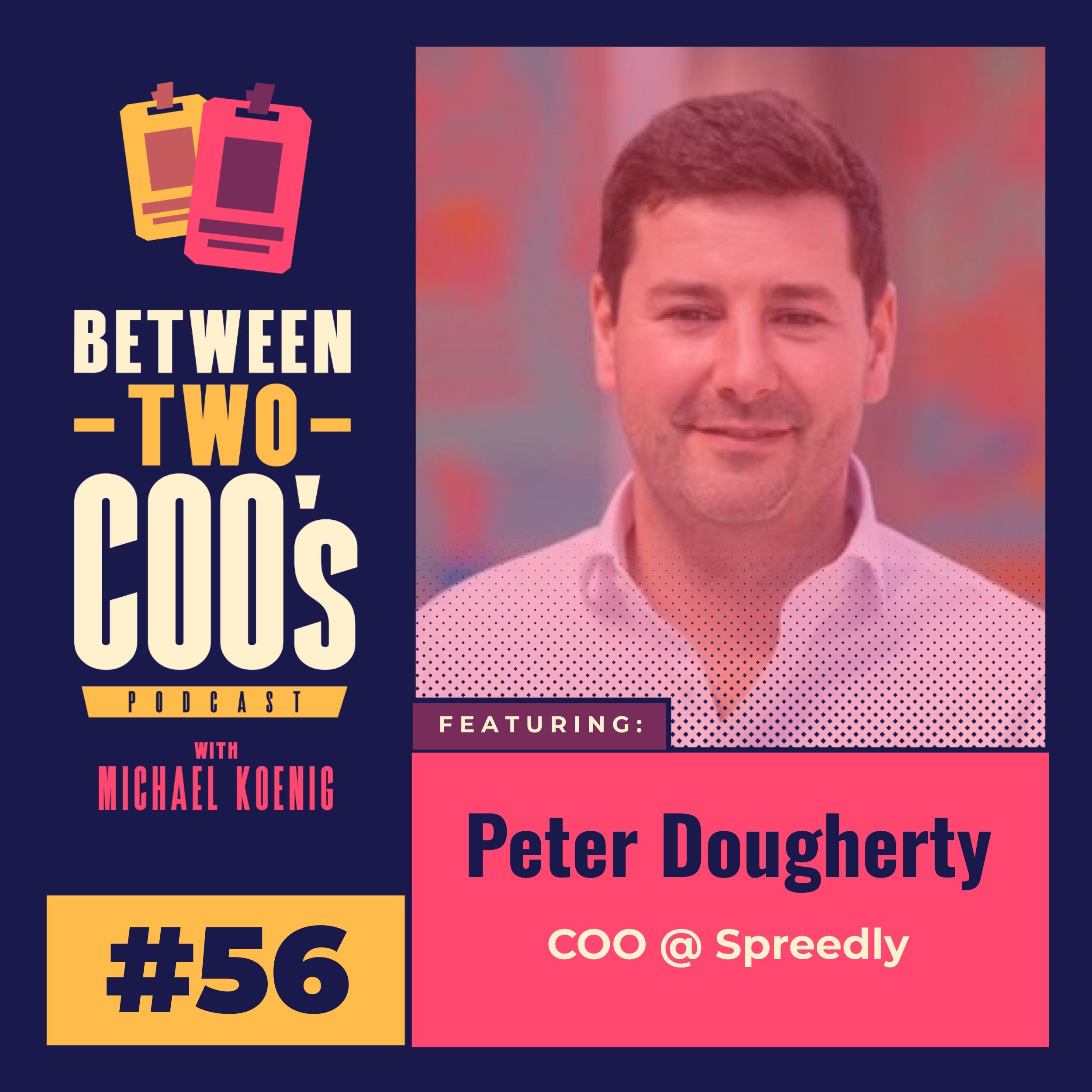
Watch on YouTube
We dissect how go-to-market organizations evolve from $20M to $100M ARR, the power of focus and role separation, and how to keep silos aligned around one customer story.
Peter also explains the shift from “payments orchestration” to “open payments” and how Spreedly’s position as the original player in the space gives them unique leverage. We walk through the future of agentic commerce, Google’s new agent-to-agent payments protocol, and what it means when agents can transact faster than any human could ever shop.
We close out with the Dodgeball acquisition, a primer on fraud orchestration, and a wild story about working an entire night shift at a nightclub during a meltdown launch.
Topics Covered
- Introducing Peter Dougherty and Spreedly (1:20)
- Quadrupling ARR growth with flat operating expenses (3:23)
- Evaluating people and what motivates them (4:26)
- One-way doors and existential problems (5:36)
- Spreedly's brand head start and open payments (11:53)
- Scaling go-to-market from 20 to 100 million (14:48)
- Customer centricity and avoiding silos (18:10)
- OKRs and the company operating system (20:28)
- Mentor lessons and perception versus reality (21:59)
- Profitable growth versus growth at all costs (26:42)
- AI, agentic commerce, and Google's payments protocol (28:07)
- Orchestration leverage beyond payments (35:06)
- The Dodgeball acquisition and fraud orchestration (38:20)
- A full night shift at a nightclub (41:41)
Topics Covered:
- How Peter defines the journey to presidency
- The “right person, right problem” framework
- One-way vs two-way doors for staffing big problems
- How to scale a GTM org from $20M to $100M
- Why open payments replaces orchestration
- Spreedly’s unique market position and 15-year head start
- Agent to agent commerce and Google’s new payments protocol
- How AI changes the velocity of money movement
- Fraud orchestration and Spreedly’s acquisition of Dodgeball
- Balancing profitable growth vs growth at all costs
- Perception vs reality in leadership
- Peter’s wildest “I never thought I’d see that” story
Mentioned in This Episode
- Peter Dougherty on LinkedIn
- Spreedly: Peter's company, the open payments platform discussed throughout
- Lightspeed Commerce: Where Peter spent 12 years before joining Spreedly
- Dodgeball: Fraud orchestration company Spreedly recently acquired
- Agent Payments Protocol (AP2): Google's new protocol for agent-led payments
Listen & Subscribe
Apple Podcasts · Spotify · YouTube · Amazon Music · RSS
About Between Two COO's
Hosted by Michael Koenig · betweentwocoos.com · b2coos.com
For more on OKRs and operational excellence, visit Helm.
Full Transcript
Show full transcript (auto-generated from audio)
Michael Koenig: Hey, it's Michael. If you've been on a Zoom with me lately, you'll notice that you have my full attention. It's because I'm not taking notes. Instead, I rely on fellow and AI meeting assistant to take notes for me, along with tracking action items and decisions, handling recordings, transcripts, and summaries, all in one secure platform.
Michael Koenig: It's kind of like magic. Built with security and privacy at its core, fellow is the only AI meeting assistant that thousands of leaders and organizations trust to capture meeting notes and recordings while keeping your data safe. They're so confident that you'll love it. They're offering an insane deal to you all between two COOs listeners, 90 days of unlimited AI powered note taking and recording completely free.
Michael Koenig: Visit fellow ai slash COO to sign up today and experience the AI meeting assistant trusted by leaders everywhere. [00:00:56]
Peter Dougherty: is the existing payments infrastructure of the world ready for the amount of transactions that are gonna happen? Because if agents can move, if humans can buy fast and there's lots of commerce that happens on the internet, agents are gonna do it a hundred times faster.
Peter Dougherty: And so is the existing infrastructure ready for it? And so that's other conversations that we're having and and we're very excited about.
Michael Koenig: Hello and welcome to Between two COOs. I'm your host, Michael Koenig, and today I'm joined by Peter Dorty.
Michael Koenig: President at spreedly Payments are mission critical, but often inflexible. Most companies rely on. Single provider like Stripe or Braintree, until they need redundancy, better margins or need to expand into new markets, that's where Spreedly comes in. Think of it as a universal adapter for payments one API to connect with over 140 gateways and they're doing some serious business with over $50 billion in transactions.
Michael Koenig: Processed annually through their platform. That's right. I stumbled on that, but that's okay. Peter joined Spreedly in 2024 after more than a decade scaling Lightspeed Commerce. We dig into how orchestration [00:02:00] helps companies de-risk revenue and what the future of payments looks like as AI and data reshaped the movement of money.
Michael Koenig: Peter, welcome.
Peter Dougherty: Thanks, Michael. Great to be here and thanks for having me.
Michael Koenig: Yeah, absolutely. First off, um, Peter, what's your story? How'd you end up in the president seat?
Peter Dougherty: Oh, not on purpose. It was really just a journey and, and, you know, having the privilege and frankly the, the, the luck of getting to make lots of mistakes and learn from them.
Michael Koenig: Yeah, and, and just serendipity over, over time things happen.
Peter Dougherty: It, you know, it, it's a career, which hopefully mine is far from over is, is a journey, right? It's two steps forward, one step back, and along the way you just learn it every step. And I've had the, I've had the privilege of having to take one step, tap back many times, but also two forward, three forward also,
Michael Koenig: Well, now we
Peter Dougherty: fun along the way.
Michael Koenig: Yeah, we know the two forward. You're president at Spreedly. What's a, what's one step back?
Peter Dougherty: Uh, I mean, when people say they don't make [00:03:00] mistakes or they don't know the answer to something, they're lying. And it, it's, it's always about how do you take that, how do you take that challenge? How do you repackage it? How do you pivot, learn, do something new and take those two steps forward. And you, I can name many examples of, of having learned from that.
Michael Koenig: You ever, you ever repeat the same mistake?
Peter Dougherty: Uh, I, I'd say I'm pretty good at not,
Michael Koenig: Yeah. Yeah, you're learning from it. You're, you're definitely walking the walk then. That's great. Well, you've definitely gotten some things right at spreedly in your first 12 months, you increased your year over year growth of annual recurring revenue by four x while keeping your operating expenses flat.
Michael Koenig: How, how'd you do it? What's the secret?
Peter Dougherty: At its core, I am a real believer in having. The right people pointed at the right challenges. And that's the way I think when you think about a business challenge or a problem or, or you know, how do we go after an opportunity? The, the way my brain works is the very first thing is about who's gonna be [00:04:00] pointed at this, who's gonna be working on this?
Peter Dougherty: And making sure you have the right skillset, the right personalities aimed at, at those individual problems. Everybody's great at something, nobody's great at everything.
Michael Koenig: Well, let's talk about that, evaluating people and making sure that you've got the right people in the right seats. It's one of the hardest things. Uh, I certainly still get it wrong. There's no question about it, and I don't think there's anyone who gets it right all the time. How do you go about it?
Michael Koenig: What's sort of your method for essentially peering into someone's soul?
Peter Dougherty: Oh, well, well said. Um, I. The first step is really understanding what motivates them, what, what do they get excited about? Because when you ask people to do hard things. It Sure everyone makes a paycheck unless it's volunteer. And sure the money's part of the equation, but what motivates them? What, when do they feel like they're winning?
Peter Dougherty: What makes them feel like they're winning? And really understanding that, and that's like the [00:05:00] very first step of understanding who can work on what problem. And then going from, hey, if, is it an operational problem? Is this a customer experience problem? Is this a, you know, an engineering and software problem?
Peter Dougherty: Is it. Is it a sales problem? And, and, and making sure people feel excited about those problems that you're, you're pointing them at. And that's really the very first step. And, and frankly, once you nail that, that first step to our analogy before is, is the most important thing. 'cause once you have people who are excited, who are energized, magic happens.
Michael Koenig: Well, sometimes people are excited by things that they don't necessarily know how to do yet. How do you, how do you one. Get them to that point, but also sometimes you just are in a situation where you can't afford to have someone learning on the job. How do you balance those two things?
Peter Dougherty: Yeah, that's a, that's a good one. I, the first [00:06:00] step is, is understanding how critical is the problem to your business.
Michael Koenig: Hmm.
Peter Dougherty: you know, the, not to use somebody else's analogy, but there's the very famous, uh, one-way doors and two-way doors, quote from a, from a very large company, CEO and founder. And it, it's a, it's a great framework.
Peter Dougherty: It's what are the one-way doors and what are the two-way doors? Who, what are the decisions and, and things you need to solve that are existential to your business? That's where you don't have room for somebody to learn on the job. And what are the problems that you can point somebody at that are maybe not existential?
Peter Dougherty: It doesn't mean that they're not important, but they're not existential. And what kind of runway do you have before you absolutely need to solve them? And if they go wrong, is it existential? And that's really where you start to decide, hey, do you have time for somebody to learn on the job or not? And the other thing is every back to your question about, you know, how do you figure out who's gonna do what?
Peter Dougherty: Uh,
Michael Koenig: Mm-hmm.
Peter Dougherty: every individual has a, has a broad set of skills, and their level of proficiency might be different depending on what the topic [00:07:00] is. And so you might find somebody who's excited by, I'll use marketing as an example, and they're great at performance marketing, but they're soft on brand or vice versa, which is the problem that's more important to your company.
Peter Dougherty: And then that's where you focus on finding somebody who's really great at the first, and maybe they ha they need to learn on the second. But that's okay for your business model and another company. The answer will be to totally different. And so it's, it's people, people are amazing because they're really wonderful tapestries of skills and experiences and really zeroing in on what are the things that are critical of the, of, in that tapestry, and where do you have time to let them learn?
Peter Dougherty: And, and you get them excited by, Hey, where do you want to learn and grow? And make sure you find the people where they have the skills you need today, and they're interested in the skills that they need tomorrow. And you can collaborate on that part of it.
Michael Koenig: We're all snowflakes.
Peter Dougherty: Yeah, exactly. Very much, you know?
Michael Koenig: Well, uh, one of the main parts of job of an executive and a leader is helping [00:08:00] determine what those existential crises and threats are and making sure that we aren't chicken little with the sky falling at every minor thing. How do you go about framing these problems to determine. What is existential to a business and what needs to be chased, and what needs to have the person who's seasoned and experienced working on it versus someone who's building that skillset.
Peter Dougherty: Well, the first thing is, is fir definitely a skill for yourself as a leader to
Michael Koenig: Hmm.
Peter Dougherty: understand what's existential, what's not, what does your company need, but the fir, the, the, the, the secret behind it all is. Every exec you've ever met is also freaking out in the back of their head to make sure that the bets that they're making actually worked out.
Peter Dougherty: Whether they seem calm on the outside or not, the secret is not is, is making everyone excited that, Hey, we're gonna solve this together, but how do you decide? What are you gonna focus on? What are you not?
Michael Koenig: Mm-hmm.
Peter Dougherty: At least for, you know, a for profit and in my experiences, growth businesses versus say, an EBITDA business. you, [00:09:00] you start with what's, what's the overarching objective of the business? Is this a growth story? Is this an EBITDA story? Are we looking to take market? Are we looking to optimize from a cost perspective? Whatever the, the scenario is, like, it really starts at like what's, what's, what's that core objective for the business and. Then from there you start to work with, you know, unfortunately it's always about the money. So you work with your CFO, you work at, you look at your income statement. Where do the opportunities, what do we wanna focus on? Is there, you know, new logo acquisition? Is there upsell retention? Is this a, you know, a, a failure to launch at onboarding perspective?
Peter Dougherty: So you start to look at all the, the revenue and understand where you want to, where, where do you wanna optimize and, and what are the opportunities? If, if you need to think about, call it profitable growth, well maybe you're gonna invest by growing your existing customer base and focusing less on new customer acquisition, which is more expensive.
Peter Dougherty: And, and so that's the first step. It's like, what is the mission and [00:10:00] where are the parts for the overall organization? you need to solve. And, and you know, in high growth organizations often you might hear of, well, we need, you know, we need to focus on revenue growth. We need to revamp the sales team.
Peter Dougherty: But actually, it might not be the problem. It might be something totally different that is impacting the sales organization, but ha but is, is not that. And so from that then you start to decide what are the skills, what are the people that you need to start having on your team, and what makes up that team? And then Frank, and then how do those skills or people interplay with each other.
Michael Koenig: Hmm. Therein lies a whole nother challenge,
Peter Dougherty: Oh yeah,
Michael Koenig: how do you get everyone to share their Legos and play? Nice. And that's, that's, uh, that can vary from, from, you know, case to case.
Peter Dougherty: a team is kind of like the next level of what we just talked about because it's, you're gonna find the people, you're gonna build the team. You've picked out what skills and the tapestry you need and what you can develop on. But then you're gonna have a team of say, [00:11:00] seven leaders and you, you're not gonna hire all seven in the same week.
Peter Dougherty: So it's not like you can do it perfectly. It's organic. It happens over time. And so you, you hire these two people and then you have somebody who's on the team already, and then you're looking for more. But you need to solve for what are the strengths and weaknesses of the people you have on the team.
Peter Dougherty: And that's really how you start to think about, you build the team as a whole versus just hiring individuals.
Michael Koenig: We talked about now evaluating people and what motivates them to understand what problems are gonna excite them and that they should work on. And you know, we've now talked about how do you prioritize throwing someone's season at it. You open the door to team and finding those complimentary skill sets.
Michael Koenig: Certainly you don't want every single person to be the same, but they all have to work together harmoniously. How do you evaluate that during the interview process? Because it can be so difficult.
Peter Dougherty: I'll, maybe I'll just, I'll use a very tangible example from, from Spreedly where, where we're at today, we, we have the benefit. [00:12:00] Which I, you know, I can't take credit for, 'cause I've been at the organization for a year and a half, but we have the, the benefit of being the brand leader in our space. We are, we are the defining name of this space, originally called payments orchestration, now called Open Payments.
Peter Dougherty: And what does that mean? Well, when we started to build out the go-to-market engine at Spreedly over the last year and a half and really start to expand it because we are the defining name of the space. We have tremendous brand power already.
Michael Koenig: Hmm.
Peter Dougherty: We have the p we have the benefit of being in market for 15 years, fact inventing it.
Peter Dougherty: So when we think about building our new m go to market, new business engine, we didn't necessarily need to focus on brand building. You know, getting to your question, we need to focus on velocity and operations and going from being a, a go to market team that was built for 20 million of revenue instead of a hundred million of revenue.
Peter Dougherty: You. And so as you start to decide what skills you need in that context, we said we needed more of a velocity skill set. We needed folks who were focused on [00:13:00] operations and scaling versus in a different context, maybe we would've had to focus more on brand building. But in, in this case, I walked in and we already had an excellent, you know, market, market leading brand.
Michael Koenig: And you, sorry, just a point of clarification here for myself. Um, payment orchestration is now referred to as what?
Peter Dougherty: So payments orchestration is the concept that you can use more than one payments processor at the same time.
Michael Koenig: Right.
Peter Dougherty: That is is a concept that Spreedly was key to creating over the last 10, 15 years. And as the market has matured in the mid-market and the enterprise to this idea, there's now an expansion of that concept to include much more just beyond your credit card processing.
Peter Dougherty: It can be your transaction fraud monitoring. It includes open banking and it can include K-Y-C-K-Y-B. And so that's where this transition from payments orchestration, which is very credit card centric, call it to [00:14:00] now open payments, encompasses your entire payment stack being multiple multi provider.
Michael Koenig: Got it. Open payments. Okay. Love it. Um, orchestration, whenever we say that everyone's eyes glaze over. Right? Open, open payments, much nicer. Uh. So you mentioned Spreedly been around for 14, 15 years. You joined, as I mentioned, in 2024, and you referenced you were in this fantastic spot where the brand was already established.
Michael Koenig: And you know, maybe this may not necessarily be the case here, but I, I'm gonna read between the lines and just say, okay. Peter was brought in to build this into an organization that can do a hundred million in revenue annually.
Peter Dougherty: Yeah.
Michael Koenig: What are some of those differences? Because we hear this all the time about executives joining at these certain growth inflection points.
Michael Koenig: When you get in there and you look at it and you go, okay, we're at 20 million. We gotta [00:15:00] get to a hundred million. You've done this before. You've seen this before. How do you start to evaluate that? What are the things that you look for first and foremost?
Peter Dougherty: Even before, call it the operational side of it. The first question is, are we going after a market that can sustain a billion dollar company and in, in this case with Spreedly? We don't have to get into the weeds on that. The answer, at least when I, you know, in my evaluation 'cause I joined is yes. And it, it's, there is this really interesting macro trend in enterprise payments where folks are really starting to move away from saying, Hey, I'm just gonna have a single provider.
Peter Dougherty: I wanna, the benefits of best of breed. Whilst having the simplicity of a single provider. So that was kind of the, is the tam big enough? That's the first question. And so you start, and that's validated by the progress Spreedly made that's validated by some, some workout in the market. And you start to look at the company and at the time, Spreedly that when I joined was just under 40 million revenue.
Peter Dougherty: Um, had been moving along very nicely [00:16:00] and spreedly spent. 10, 15 years of evangelizing this space. This is why you should think about payments orchestration. Then the e-comm boom of the early COVID years happened, and all of a sudden everybody wanted to do orchestration. Investment came in, the space started to grow, and all of a sudden we were competing for the very first time.
Peter Dougherty: And when you, to your question now of, of how do you find that inflection point in organization to transform it, to be ready for the next step? Spreedly had grown so nicely, very organically being the original name in the space, validating the product, validating the market. And when you start to understand the operations of a go to market team, of an operations department of a product and engineering organization at 20, 30 million revenue, it looks very different than a 5,000 million dollars organization.
Peter Dougherty: And the first step is really understanding, at at least this is the lens I look through, is. Are the problems getting so big? And I'm talking about the internal problems, like the operational [00:17:00] challenges. Are they becoming big enough that instead of one person, I'll use a sales example, one person in sales is both over new and expansion.
Peter Dougherty: Well, are the problems big enough now that that should be two people and you start to drive focus? And I'm a big believer in having folks who are focused with very clear metrics and KPIs that they're focused on. But at the same time, you can't have, you know, a hundred VPs focused on very slim, you know, mandates.
Peter Dougherty: And it it, it really starts to become, Hey, is this job 30 to 40% of somebody's time? Well, maybe that's a separate team. And you start to expand that. And that's, as you start, that's how you start to scale an organization with focus. And you start to carve off problems that maybe are big enough for somebody or a leader, you know, a VP of director to be.
Peter Dougherty: A big enough problem to warrant putting a whole team on that problem. And so in Spring Lee's case, a very, very simple example was separating the new business and account management, commercial account management function into into two teams
Michael Koenig: That makes sense, [00:18:00] especially in terms of how you phrased it. Is this enough that warrants a full-time role or just side of someone's desk?
Peter Dougherty: Exactly right.
Michael Koenig: Now, as companies grow, the ops tend to drift towards silos. From having the person who, as you just mentioned, was doing new accounts and expansion to having one person doing new accounts, one person doing expansion, and then, you know, this, this expands even more.
Michael Koenig: How do you keep all of the go-to market functions aligned around one p and l around one story so that the right hand knows what the left is doing.
Peter Dougherty: Yeah, and, and so I think the first is how do you make your company, your culture, customer centric? And there, there's a slightly different flavor to that in new business account management, even all the way down to the accounting team who manages, you know, collections, right? And so how do you always make sure everybody in your organization is thinking about the [00:19:00] problem that you're solving for your customers?
Peter Dougherty: And I, I know it sounds sometimes a bit pedantic to say that in 2025, like, how are you, cus how do you become customer centric? But it's not, it's not a given that every company is, and so. Ensuring that you are back to the, how do you hire people want to care about the problems they're solving for their customers.
Peter Dougherty: Again, when you're talking about salespeople, they also care about their, their commission check, which is not a bad thing, but you also need to make sure that they're don't only care about that. And so to your question about how do you solve for silos and making sure it's not just silos and the customer feels like they're talking to a hundred different people. There, there is a certain level of care that you need to have in the heart of the individuals you're bringing onto the team and making sure they're just not doing things that are not in the interest of your end customer. And I, I'm, I'm very passionate about that. And you just, that is really one of those things you really just need to imbue in every internal communication and your sales kickoff and your company meetings and your team meetings.
Peter Dougherty: Like, we're gonna do the right, we we're here to grow the business, [00:20:00] but we're also not here to screw anybody over in the process.
Michael Koenig: War time or peace time at Spreedly?
Peter Dougherty: Definitely war time in a good way.
Michael Koenig: in a good way. Okay, so
Peter Dougherty: are. We gr and this is me, like, I like growth, I like problems where it's like, well, hey, this process or internal systems was designed for three years ago and all of a sudden we're pushing so much through it. It's breaking. Awesome. Great problem to have. Let's figure out how to fix that.
Michael Koenig: We talked a bit about how decisions are made. I'm always curious, what's the operating system that you all run? OKRs, for example, or, I'm very curious about this.
Peter Dougherty: So OKRs are one half of the formula. OKRs are really important when you are thinking about me naturally measurable parts of the business. As much as everybody likes to say it, not everything is measurable. And do you, sometimes there's a, there's a, there's an intangible piece that you [00:21:00] always need to pay attention, and that's a little bit of the art of being a, a leader. But from, from a pure like basic facts operating system, you absolutely need to define your OKRs. And then there's always the debate of do you keep your OKRs through the whole year, even if things have changed six months through the year and then you transform it. Um, or do you run them through all the way through?
Peter Dougherty: So there's always an interesting debate around that. Outside of OKRs, there's the, call it the, the financial metrics, which inevitably in a growth business are important, which are not necessarily the OKRs. there's intangible metrics about. Call it in, in, in the investing world, you call it alpha.
Peter Dougherty: It's like, what's the lift that these people on your team are generating? And that's more the, the intangible that is really the art of leadership that you're, you're, you're creating momentum or you're trying to build momentum for your team members. And you're team members are frankly building it for you because it, it's very much about how do you create the momentum and the people and the way they're working to, which then drives the OKRs and you see it in, come out in the OKRs.
Michael Koenig: We [00:22:00] all learn it from someone who was one of your mentors along the way.
Peter Dougherty: There's a, there's a, there's quite a few, but you know, when I think of the top of the list, there's the, the one of the leaders at, at Lightspeed that I spent 12 years at building and growing. I learned a ton from about how to lead, how to work with people, how to build momentum, how to hire, how to think about building teams.
Peter Dougherty: And I learned a lot from him over, over quite a long tenure. And I was, I was privileged to have that opportunity.
Michael Koenig: Right. So hard to find, right? But when you do invaluable.
Peter Dougherty: Yeah. And, and, and maybe in just a interesting observation, this is outta my own experience, is it almost breaks your heart when you realize your mentor isn't perfect,
Michael Koenig: Yes.
Peter Dougherty: so much from them for so long and then you're like, wait a minute. I don't agree with this. And it's, you have conviction that X, Y, Z you don't agree with.
Peter Dougherty: And that's also when you start to realize that you need more than one and you can only learn so much from [00:23:00] one person, then you need to start finding different parts that you learn from different people. And that was a really interesting learning for me as well.
Michael Koenig: When your idol falls, it's rather jarring. I've
Peter Dougherty: Yeah. And it, and it doesn't mean you didn't learn a ton from them.
Peter Dougherty: You, you got, and in my case, I learned a ton, a ton, a ton. But at some point there's a a point where it's like, okay, now I need somebody else.
Michael Koenig: What's one of those lessons that that stands out?
Peter Dougherty: Hmm. Good one about, you know, when the idol falls.
Michael Koenig: No, but, well, I wasn't thinking that, but that's
Peter Dougherty: Okay. I was like, oh,
Michael Koenig: No, no. Maybe just, let's talk about the idol teaching you something before the fall.
Peter Dougherty: I so.
Michael Koenig: I.
Peter Dougherty: Uh, here's one actually, here's a good one, and it's gonna make me sound a little cynical, but I don't mean it that way. Perception is reality, which, you know, maybe in today's political climate is very relevant, but it, it's perception is reality for many people. [00:24:00] And managing perception matters.
Peter Dougherty: And I think one lesson that I, I took from this person was always around the. Hey, hard work and great results will always pay off, but it's not always about that. It's about what do people perceive of your hard work? What do people perceive of these results? And for one person, these results might be amazing.
Peter Dougherty: And for another person it's like, eh, that's where perception is reality. And so you might be, you know, crushing your growth targets, generating the savings that you promised to the board, whatever it is. But what does good look like or the definition of what good looks like? Is malleable and managing that definition is sometimes more important than the results themselves.
Michael Koenig: And let's be clear, that's not politics. We're not talking about politics here. We're talking about essentially, let's call it marketing, right?
Peter Dougherty: Absolutely. Absolutely.
Michael Koenig: know that it's happening.
Peter Dougherty: And, and when I talk about, you know, what does [00:25:00] good look like and managing that definition. That's a skillset, and it depends on the context. It could be with the board, it can be internally with your own direct reports, et cetera, that that lens exists everywhere.
Michael Koenig: How do you as a leader draw that out so that you know the wins and you understand the reality so that perception matches it. It.
Peter Dougherty: Oh, good one. You know, going back to my comment of, of what is the end objective we're all trying to achieve, and I'll just use it, you know, even in the, in the Spreedly context, like we are a growth business. We are growing nicely, but we're also profitable. And so if we set the objective as, Hey, we want to grow and these aren't the numbers, but we want to grow a hundred percent year over year.
Peter Dougherty: And I would, we'd and I could say, Hey, I'm so excited. We grew a hundred percent year over year. That's grew revenue a hundred percent year over year. That's awesome. But then you kind of scroll down the income statement and you're like, yeah, but your [00:26:00] EBITDA margin is negative 30%. But what does good look like?
Peter Dougherty: Well, maybe that's the objective, maybe for the VC world. That's awesome, but that's not the business that we're trying to build at Spreedly. We are trying to build a business that is. Healthy and growing, but also is in it for the long term. And so there's a balance there. And so what is good look like in sprinkler's case?
Peter Dougherty: It's growing healthily while still generating positive cash flow. And for, for Lightspeed, we call it, for my first five, seven years, that wasn't the answer. We wanted to grow. We had a tremendous market opportunity and we wanted to take the market. And so the profile that Spreedly is today wouldn't have been good in 2010 at light speed. That's about knowing what good looks like is very important.
Michael Koenig: Well, you see me looking down. I have this glass desk and I, I always write things on it, and one of the things that I circled from before was how your, how the growth has changed to profitable growth versus growth at all costs, any and all costs. That is and. [00:27:00] We've been around long enough to have lived through those cycles at this point, as professionals.
Michael Koenig: Has Spreedly had that? Certainly. I mean, not since you've been there, right? 2024. I guess what, in 20, 21, 22, we really started to hear and focus companies actually focusing on good, solid business fundamentals around profitability. Did Spreedly have that in, in Its in its history.
Peter Dougherty: I think Spreedly is a really unique organization in that even rewind 10 years ago, say we were never growth at all costs. This was always a profitable growth organization. Hence why it has sustained and grown and really defined this space while many others have come and gone. And it doesn't mean that pro, you know, growth at all costs was a bad thing when it was a good thing, but it just, that's not been the DNA of Spreedly,
Michael Koenig: And so when we read, uh, spreed Lee's S one filing, we're not going to see Spreedly lost $30 million on $250 million of revenue.
Peter Dougherty: I [00:28:00] suspect not no. Doesn't mean there's not great companies out there that do exactly that, but that's not ly. At least not today.
Michael Koenig: That is very true. Well, um, what I'm really curious about and let's, let's talk about AI and, and in particular, this is just specifically in terms of the way money moves. I don't know much about this, but I imagine that there are a lot of really interesting ways that AI is going to change the way money moves around the world.
Michael Koenig: What are you, you are someone who sits there, thinks about this all, all day. What should we be thinking about? Like what are those, like what is that moment where something happens and you're gonna be like, we're here.
Peter Dougherty: Ah, yeah, and actually very timely. You know, I don't know if you saw the, the release from Google, uh, I guess it was a week ago, about, there's a, a new agentic payments protocol that they just, they're starting to build support for. [00:29:00] So very, very timely question. It's, it's a really interesting, and, and so the, the que maybe just to, to talk about the underlying things that are happening in the space. If you have an agent represent, representing Peter on the internet, shopping on my behalf, there's the kind of the personal, the, the questions that need to be answered and what's starting to happen in, in the space as we talk about this is, does that agent have a, are they buying the right thing? That's kind of between Peter and the agent,
Michael Koenig: Hmm.
Peter Dougherty: but do they have authority to spend money without human interaction? Do they have the abil are, are they using the right payment method? All of these questions need to be answered, and that's some of the stuff that the Google, Google Protocol is trying to address. And I, it's very exciting for Spreedly actually because we're, we're well set up to be able to support this new era of commerce.
Peter Dougherty: And so when we think about ag agent to commerce and how people are gonna buy, the agent and the agent to agent interaction effectively become the front end for many of these commerce platforms. [00:30:00] Both for, call it the seller and the buyer, and how there, there was already a lot of work on how agents talk to each other, right?
Peter Dougherty: That's the MCP and that. That's kind of eight months ago. Still very exciting. It's still very new, but it's also funny to talk about eight months ago. It's like, yeah, old news, but now it's how do you have agent to agent payments is really, we're at the very beginning of that cycle and we're very excited about it. The other things that are starting to happen is. D is the existing payments infrastructure of the world ready for the amount of transactions that are gonna happen? Because if agents can move, if humans can buy fast and there's lots of commerce that happens on the internet, agents are gonna do it a hundred times faster.
Peter Dougherty: And so is the existing infrastructure ready for it? And so that's other conversations that we're having and and we're very excited about. But ultimately it's still gonna be an individual individuals accountable for paying. This bill and an agent is representing them, and you need to have a connection between the agent and the [00:31:00] individual who is, who is accountable for paying that bill, and that that's that last little bit that is starting to, to to be addressed by this new Google protocol, which is very exciting.
Michael Koenig: The level of commerce increasing based on the speed at which purchases can occur. I actually hadn't even thought of that. It makes sense, but is that. I mean, it makes sense to me. I'm just processing this myself now, like you're kind of blowing my mind. And as I think back to, you know, having to make a carbon copy of a credit card and you know, swiping that or writing checks, right?
Michael Koenig: All of these things are speed and speed increases the volume of transaction. And so in an agent to agent payment world, we're now going to see that. Speed increase and therefore gross, you know, GMV just increasing as well. So when you're talking about the, the, the, the rails, tell me a little bit [00:32:00] about that, because we hear that tossed about quite a bit generally in the crypto sense and in Spreed Lee's world.
Michael Koenig: What does that mean?
Peter Dougherty: And, and I, I'm, I'm not even thinking about which rail it runs over. 'cause that's, that's a, a separate discussion. Right. And then you can get into, is it crypto stablecoin, is it open banking? Is it. Traditional credit card rails. And then there's, there's, there's, call it even the, the, like, fed Now is a new government led open banking initiative.
Peter Dougherty: So I I, I'm not talking about that though. That's a really interesting discussion as well. This is really just about the amount of commerce that can happen in 24 hours of a day. Today you're buying a pair of Adidas and you go on adidas.com and you're gonna buy a pair of sneakers. And you're gonna think about it, you're gonna look at it, you're gonna read the descriptions.
Peter Dougherty: You're gonna say, Hey, does this fit, et cetera. I mean, in this future world, in this, I'm, I'm not saying anything revolutionary. It's like, here's my profile, here's the things I like. Here's the things I don't, here's some shoes I've bought in the past agent. Go find the right one for me. [00:33:00] And that can happen.
Peter Dougherty: You know, may, maybe I'm a shopper and you're not, you know, everybody's different. But that might take me an hour of perusing before. But an agent can do that significantly faster. Now, of course, I'm still accountable for making that payment. I have to have enough money to do it. But the idea that commerce can happen so much faster with this new ag agentic infrastructure is really exciting.
Peter Dougherty: And there's new, it's almost, you know, it's not exactly this, but it's almost like programmatic trading on the stock market all of a sudden. But commerce,
Michael Koenig: Sure.
Peter Dougherty: and that's, that's the, that's what I mean by the infrastructure has to be ready for that. Because then you start to ask questions of, well, you gave the agent authority to buy these pair of shoes for you.
Peter Dougherty: What if they don't fit? Who's responsible? Is it OpenAI or is it me? And so you have to sign off on that transaction, even if you're not in the loop on the transaction. And that's again, back to some of these challenges in the payment space that we're starting to think through to enable this really exciting new future.
Peter Dougherty: But we have a few things we still gotta solve.[00:34:00]
Michael Koenig: Yeah, I
Peter Dougherty: fraud is a whole other category that you have to deal with in this new world,
Michael Koenig: Right. I could see, uh, an agent getting you, um, you know, a youth sized shoe in its final sale than what
Peter Dougherty: possibly. It's like, Hey, I found a really good price. It was on sale. I ordered from
Michael Koenig: Yeah,
Peter Dougherty: I wear size 10 and a half. Maybe they ordered me in size nine. They did. Agents aren't perfect. No, and and humans aren't either. Right? PE humans make the same mistakes. But if all of a sudden you're, instead of buying one pair of shoes, agents are buying hundreds of shoes a day, you're exponentially increasing the impact of that, of that mistake.
Michael Koenig: I buy the wrong thing all the time. This is just a quick aside because you made me think about it. I went to Costco, I came home with a sweater. I turned, I, I open, I put on the sweater. I showed my wife and she looks at me and she goes, you bought a woman's sweater? And I said, what are you talking about?
Michael Koenig: And she's like, well, first look at the tag. It's got a woman on it wearing the sweater that didn't tip you off. So the fact that I'm that bad, hopefully, I mean, an [00:35:00] agent shopping
Peter Dougherty: most agents are pretty good at Would, would
Michael Koenig: it could be it. I mean, it can't be worse
Peter Dougherty: Yeah,
Michael Koenig: for me at least. Well, what's interesting as I think about this, uh, as an orchestration layer for payment processing, it gives merchants more leverage because you're not locked into a single provider.
Michael Koenig: Right. So they can negotiate from a position of strength. Do you think that COOs and CFOs should be thinking about that same power dynamic in other areas of SaaS, of cloud of supply chain? Do we need an orchestration layer for every aspect, or is it more around like data ownership and portability?
Peter Dougherty: Spreedly is in a unique position where we do change the power dynamic in. To the benefit of our customers, but not every problem in a [00:36:00] business necessarily will see a benefit from an orchestration of things. Commerce is one of those areas where you already have amazing scale, and if Spreedly can increase your authorization rates by 2% or decrease your cost of acceptance by 5%, I'm making the numbers up, but if you're transacting a billion dollars a year, all of a sudden that's real money. But, you know, and I always, I always have this internal joke, you know, in the office we have the, you know, the plants that we, and it's like a service you have, it's, and we call it plants as a service. Is that problem big enough to have multiple plant providers? I'm being a bit silly, but it's, it's a, you know, I'm, I'm, I'm exaggerating for effect, but that's, that's an example where that might not make sense.
Peter Dougherty: And so where you have scale on a problem or a challenge or something you want to do. For sure that best of breed and or an orchestration of best of breed might make sense. And that is really, you know, you're, you're highlighting essentially our jump from payments orchestration to [00:37:00] open payments where we start to think about more than just the credit card rails.
Peter Dougherty: We think about, Hey, do you need multiple fraud providers? Do you need multiple open banking providers? Maybe you need multiple votes depending on PII and for example, GDPR rules and, and local data residency rules. Those challenges are ones that spreedly is exceptional at solving, where you have scale.
Michael Koenig: And so what size business do you see coming into Spreedly at that, at that like nascent point of needing that international compatibility?
Peter Dougherty: Spreedly is focused on helping businesses grow. That's usually the entry point.
Michael Koenig: Hmm.
Peter Dougherty: And it's actually less about cost savings, even though that's just what we were talking about. That tends to be, you know, call it year two, year three, down the road with freely. Usually it's about, Hey, I'm doing this new thing, and it could be international expansion, but often it's also, Hey, I'm opening a new line of business.
Peter Dougherty: Maybe I sell beauty products and I'm gonna get into home goods. I'm making it up, but it's often something new. And that is usually that first [00:38:00] step. And that first step usually happens in the mid-market, around 50 to a hundred million of annual revenue for, for the merchant. The enterprise obviously tends to be much bigger than that.
Michael Koenig: Got it. Okay. That puts you in a really interesting space of having, uh, fairly significant ships joining
Peter Dougherty: Mm-hmm.
Michael Koenig: are just going to then explode. It's a great business to be in. You recently made an acquisition. Can you tell me a little bit about that?
Peter Dougherty: Yes, we are very excited about the addition of dodgeball to the team, uh, similar to the way Spreedly was the defining name of payments orchestration 10, 15 years ago. Dodgeball is the, the defining name of this idea called Fraud Orchestration. And as we become an open payments platform, having the best of breed of every provider in your payment stack.
Peter Dougherty: Abstracted away, or the simplicity being abstracted away by Spreedly. We want to continue to add more categories. Dodge ball's a great, a great [00:39:00] example of that. You can have one fraud provider for the us you can have another one for Mexico. It could be, hey, the, you know, that beauty care versus home goods example, maybe there's different fraud profiles there.
Peter Dougherty: Um, it could also be different, different fraud evaluation tools based on the payment methods. Maybe you have a fraud management tool for crypto, but it's something different for your credit card transaction stream. So those are the kind of opportunities that we're really excited about. And just like we're all very excited about agent to commerce and the velocity of commerce coming, call it from a good actor perspective of increasing commerce fraud, actors are also starting to leverage that new technology.
Peter Dougherty: And so managing fraud is, uh, an increasingly complex challenge that our customers have. And we're excited to add dodgeball to the mix. Again, fresh off the press, only a week ago, week, week, week old news. So we have a bit of integration work to do, but we're very excited about the prospects there.
Michael Koenig: Well, it, it's perfect because it's almost like I gave you these questions ahead of time because I [00:40:00] wanted to talk about fraud. Let's talk about the fraud. It's, it's a cat and mouse game. It's, I, I liken it to InfoSec. You're always trying to play catch up. And now with ai, this is the difficulty in this problem has exploded. What is dodgeball doing differently that gets you excited about that cat and mouse game?
Peter Dougherty: Every pro, and this is true in fraud, it's true in all the categories we serve, but in fraud, every provider is good at one thing. They're not great at everything. And with, when you double click on fraud, there's different types of fraud in commerce, there can be a. You know, the good old, uh, stolen credit card, but you have account takeover, you have friendly fraud is another concept.
Peter Dougherty: You have chargeback fraud. There's a lot of different categories of fraud, and so being great at each one is very [00:41:00] hard. And what we're excited about is we have this ecosystem of fraud providers who are, some are great at one thing, some are great at another. And what dodgeball allows our merchants to do is take the best of each one of them.
Peter Dougherty: That is really the core benefit of it. And so account takeovers is a very different challenge than stolen credit cards,
Michael Koenig: Hmm.
Peter Dougherty: but both exist in commerce today and not everybody's great at both. And then there's the cost factor. Maybe you have a more expensive fraud tool. Uh, you put on a more challenging business line, call it, and you have a less expensive fraud tool where on a business line that you have less fraud.
Peter Dougherty: So there's also a cost aspect to this as well.
Michael Koenig: Very interesting. Well, I mentioned my last and favorite question and it's time for it. We've all had those moments in the leadership seat where we've just seen something completely off the wall and thought, I never thought I'd see that. Do you have one you can share?
Peter Dougherty: Yeah. I thought about the, so this was the one question you shared in advance [00:42:00] and I thought about it. Um, you know, I've, I have had the privilege of having had many experiences. Um, you know, being threatened by the mob all, and I'm like, dude, this is software Relax. That's not my story for today, but it, I've had them all, and I think the one that I'll, I, I'll, I'll share is a around when at light speed, when we were starting to get into the restaurant space, you know, for a very long time, we built a great business on serving independent retail stores. We said, Hey, on Main Street there's also independent restaurants. They're the same. We, that was a big learning. That wasn't necessarily what came to be true, but one of the very first customers we signed was this great nightclub. I, I have no idea how we signed it. It was like amazing customer to get amazing.
Peter Dougherty: And this is like two months into this whole new business line. We had no idea what we didn't know and. They go live, they opened up and it was like hockey players and F1 player, like it [00:43:00] was the cool re new nightclub in town. I'm like, how did we win this anyways, great customer, great restaurant too. And the first night was a total disaster. Total disaster. We didn't know. We, we learned a lot in a very short period of time. And the second night they said, you're gonna have people working here all night to help us get through this night. You know, they were using our transaction management software. This is lights be done, not speed late. And so they, you know, the, the punchline is I ended up working a full shift until three in the morning at the, at a nightclub.
Peter Dougherty: I'm like, I work in SaaS, you know. You know, I didn't work in, in a restaurant university. I worked in construction, so I actually didn't have a ton of experience working in restaurants at the time. And I was shadowing these servers through the whole night and I'm like, oh my God, is that so and so at the, and it was like the whole restaurant, and it was a serious learning experience.
Peter Dougherty: Um, and I'll never forget that. And it's just, it was a full shift at, you know, a hot nightclub with really interesting people. And I, it was [00:44:00] a crash course in how. A how the restaurant industry worked, which if you ever talked about that, that's like you, you peel back the layers and it's a totally different business than anybody realizes it was a crash course in being customer centric and making sure what you sell and you implement is actually what you can provide and the impacts of if you don't do it right.
Peter Dougherty: And it was a crash course in being cus in, in how to be a great partner because you know what? We didn't necessarily have the exactly the right solution that that customer needed. But they stuck with us because we, we, we partnered with them to figure out the future together. Anyway, I took a lot from that experience, but I'll never forget it.
Michael Koenig: That's amazing.
Peter Dougherty: Yeah,
Michael Koenig: And I didn't see that on LinkedIn, that you gotta
Peter Dougherty: that's not a LinkedIn story.
Michael Koenig: Yeah. Your tagline should also be, or, or headline, whatever it's called, should also be threatened by the mob.
Peter Dougherty: Oh yeah. That's a different story. This is just sas. Let's relax here guys.
Michael Koenig: Well, that's awesome. I can't wait to hear that one. Uh, well, [00:45:00] Peter, thanks so much for joining me. Where can people go to keep up with you and Spreedly?
Peter Dougherty: spreedly.com. Lots of great news coming out. We're doing some exciting things. Um, and we'll see you at payments, conferences around the world.
Michael Koenig: There you go. Payments, conferences around the world. Love it. Thank you to you all for listening to Between Two COOs Tuner. Next time for our next COO chat and be sure to subscribe on Apple Podcast, Spotify, or wherever you listen or watch. Podcast, 'cause that's a thing. Just visit between two coos.com for more.
Michael Koenig: And if you have a minute, please leave us a review so others can get great advice from phenomenal COOs. Or in this case, presidents. Thanks for listening. Tune in next time. And until then, so long I.
More on AI in Operations

The COO's Execution Playbook
Frameworks, templates, and hard-won lessons from operators who've been in the chair. Every Tuesday.
No spam. Unsubscribe anytime.