Seven agencies and a calendar: what actually decides whether a data center in orbit gets built
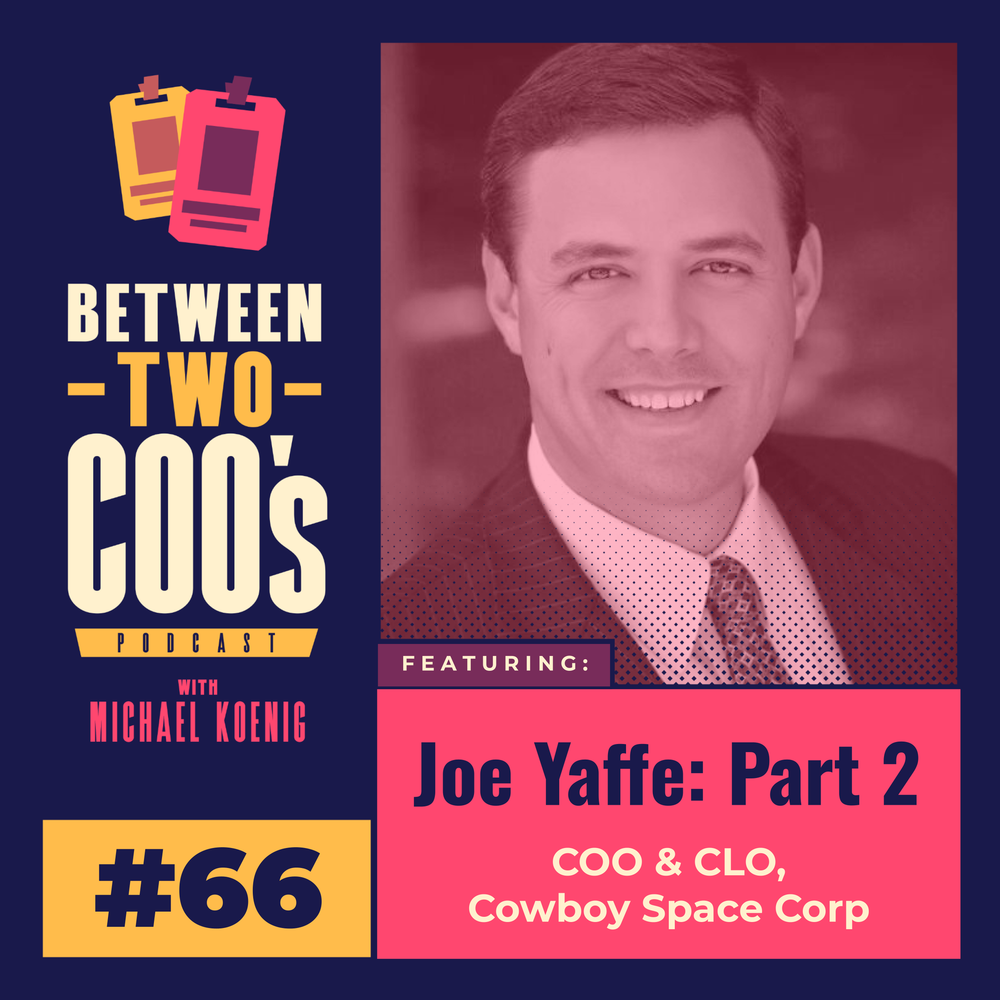
The interesting thing about talking to Joe Yaffe twice is what changes between the conversations. The first one is about whether an orbital data center is possible. His answer is that it plainly is, that no physics is being broken, and that everything remaining is engineering.
The second conversation is about what remains. It turns out to be permits, agencies, a labor market, and a date on a calendar. None of it is glamorous and all of it is decisive.
Yaffe is COO and chief legal officer at Cowboy Space, which is building data centers that run in low Earth orbit. He spent 31 years practicing law in Silicon Valley before this, most recently as managing partner of Skadden's Palo Alto office.
The only number that matters
Start with the test, because everything else is downstream of it.
Yaffe says the end customer has to be indifferent to whether their compute comes from orbit or from a data center down the street, and that the indifference is primarily about cost. So Cowboy Space measures itself in one unit: what it costs to run a GPU for an hour, against what the same hour costs on the ground.
He is pointed about the fact that most of the category measures something else. A lot of people talking about orbital data centers are focused on the cost of energy in space, quoted in dollars per kilowatt hour. His view is that this is the wrong denominator, because nobody buys kilowatt hours. They buy compute.
That is not a technical preference. It is a discipline about who the customer is, and it is the kind of thing that separates a company from a program.
Brilliant technologists, unasked question
His diagnosis of his own industry is the sharpest thing he says, and he is careful about it.
The space industry, outside a few large players and the legacy prime contractors, is relatively new. A lot of new entrants are run by people he describes as brilliant technologists who are not especially focused on whether the thing works as a business.
Then he declines to make it a criticism, which is the part worth noticing. He says you need those people, because an enormous amount of new technology development has to happen and someone has to push it forward without a spreadsheet in the room.
The implication he leaves unstated is the useful one. If the science is settled and the constraint is execution, then the operator's question stops being interesting to ask and starts being the only one that matters.
An engine tuned to the edge
The head of their rocket program told him something he had not considered, and he passes it on as a genuine surprise.
The perfect rocket engine is designed to operate right on the balance point between failure and success. You tune it that way because you want maximum efficiency out of every kilogram. The consequence is that the difference between the two sides of that line is a catastrophic meltdown or a clean orbit.
The business, as he puts it, is permanently on that precipice.
What follows is the part operators should sit with. Cowboy Space carries no third party payloads. Their only customer for the launch is themselves. So a failure does not destroy someone else's satellite, does not break someone else's commitments to their own customers, and does not stop the program.
If we make it work once, he says, we can replicate it. Along the way, accidents do not set us back the way they would set back a launch provider. We can iterate at speed.
That is a structural advantage disguised as a risk profile, and it comes entirely from a decision about who you sell to.
Two billion is a small bet now
He is blunt about money. The $365 million raised so far is not enough, and it is going to cost more than that.
His argument for why the next round is not what keeps him up is one of the more striking reframings in the conversation. Expected capital expenditure on AI infrastructure, he says, is the largest infrastructure build out in the history of humankind. Six or seven trillion dollars. Gigawatt scale terrestrial data centers that are five, seven, ten years from being online, with hundreds of billions already committed.
Set against that, the capital required to design and launch a rocket program is small.
As crazy as it sounds, he says, placing a two billion dollar bet in the context of current global infrastructure spending is a relatively small bet. Then the honest coda: I would never have said that five or ten years ago. But that's the world we live in.
He does name the one thing that has to go right, and it is not about his company. There is currently only one heavy lift launch operator flying at cadence anywhere in the world, and it is SpaceX. His bet is that a world with exactly one such provider does not persist. He names Rocket Lab, Stoke Space and Impulse Space as real programs that are not yet launching at the frequency the segment needs.
Chips you can never touch again
This was the thing nagging at me between the two conversations.
A top AI chip run hard has a short useful life, and the ordinary answer on the ground is to swap it, or cascade it down to lighter work. Cowboy Space is putting chips somewhere no technician will ever go. In a sense the satellite outlives the silicon inside it.
His answer is that the modeling assumes a six year useful life, that performance degrades over that window, and that it remains profitable anyway. Eventually the satellites are demised, burning up on re-entry with the chips inside them, or otherwise de-orbited.
The trade he is making is speed. Getting frontier chips into a terrestrial data center means construction, permitting, and regulatory hurdles. Yes, you can swap racks, but only after the building exists.
And then the number that reframes the whole business: the current wait for a large data center in Northern Virginia is about seven years. Longer overseas. He adds that the political climate is running against new large scale AI data centers, which widens the gap rather than narrowing it.
What Cowboy Space is really selling, then, is not compute. It is the difference between seven years and an industrial manufacturing process.
Who regulates a data center in space?
Nobody, and everybody, which is the answer that makes it his problem.
Ask who governs an orbital data center and you get a list rather than a name. The FCC handles communication between Earth and satellite. The FAA gets you the launch permit and clears the corridor from the ground to the upper atmosphere, and then its jurisdiction stops. NASA and the Space Force, along with state bodies like Space Florida, run the launch sites. The NTIA exists to keep commercial activity from colliding with government satellites. NOAA wants assurance you are not interfering with its sensors.
And the FDA regulates their lasers, because the FDA has historically been responsible for laser devices, including the ones used for LASIK.
That last one is the detail people remember, and it is not a joke. It is what happens when a genuinely new kind of object arrives in a regulatory system that was built around older categories.
Yaffe calls it a very complex and not very wieldy environment, and he is not just complaining about it. Part of his job is working with senior people across those agencies toward a more streamlined approach for commercial space generally. He is complimentary about the FCC's current leadership and their space modernization proposals, which Cowboy Space commented on.
He also flags the unresolved part. There is well developed law governing data privacy for information sitting on the ground. There is considerably less certainty about data in orbit. Add export control on top.
That is a reason to have a lawyer in an operating seat rather than on retainer, and it is the strongest argument in either episode for the way this company is built.
The thing at the top of the list is people
Then the reversal.
Asked what else is on his thousand item list, Yaffe does not say rockets, or capital, or regulation. He says talent. Hiring. The labor market.
Deep tech, aerospace and AI are all competing for the same relatively small slice of the labor pool. The people he needs have specific experience and have to be willing to join a two year old company for what is honestly a round the clock job. Finding them, he says, is a full time job in itself.
His description of what he actually does about it is refreshingly unglamorous. Hiring in-house recruiters. Streamlining the process. Working the referral system. There's nothing fancy about any of that.
He also makes a point of a shout out to people entering the field, which is worth passing along. If he could go back and tell his kids anything, it would be to become an aerospace engineer. Well paid, fascinating, and you are not sitting in a cubicle working on somebody else's bookkeeping ledger.
A company that runs on a date
The last question is how the place actually operates, and the answer is that it runs on a clock.
He notes, drily, that this was supposed to be his retirement. Then: if I had 25 years to do what we're doing, this would be a very luxurious job. It would feel like retirement. But we don't.
They are aiming to launch what they call mega, a one megawatt compute data center, in December of 2028. Roughly two and a half years.
The distinction he draws next is the most portable idea in the episode. In the legal business there are some hard deadlines, but the truth is there are relatively few, and things slip constantly. In this business the deadlines are real. You have launch windows. You have a set period in which you can test a component or an integrated satellite, and if you miss that window you are pushed back a week, because you simply cannot do it.
A company where deadlines cannot slip runs differently from one where they can. That is the actual operating system, and it explains why hiring sits above everything else. The clock does not care how good the plan is if there is nobody to execute it.
His closing thought on the payoff is characteristically wry. It's mission driven, so when you get to the end you see it. What I haven't told them is that the next day they come back and work on the next mission.
The 5 things I took away from this conversation
1. Pick the denominator your customer actually buys in. Most of the category measures cost per kilowatt hour. Joe measures cost per GPU hour, because nobody purchases electricity, they purchase compute. Choosing the wrong unit lets you win an argument that the market never asked.
2. Being your own only customer is a strategy, not a limitation. With no third party payloads, a failed launch costs Cowboy Space time instead of somebody else's satellite and reputation. That single fact is what lets them iterate at a speed a launch provider structurally cannot.
3. The real gap is seven years versus weeks. A large data center in Northern Virginia takes about seven years to stand up. If you can convert that into a manufacturing process, you are not competing on compute at all, you are competing on time to compute.
4. New things break old categories. An orbital data center is not a launch, not a communications satellite, not an imaging satellite, so seven agencies each own a slice and the FDA is in there because of LASIK. Any genuinely new product eventually meets a rulebook written for something else. Budget for it.
5. The clock decides the org chart. Hiring sits above capital and regulation on his list because launch windows do not move. When your deadlines are genuinely hard, staffing stops being an HR function and becomes the binding constraint on the whole plan.
FAQ
Who regulates a data center in space? No single agency. Yaffe lists the FCC for Earth to satellite communication, the FAA for launch, the FDA for laser devices given its history with things like LASIK, NASA and the Space Force along with state bodies for launch sites, the NTIA for deconfliction with government satellites, and NOAA for sensor interference. He adds unresolved questions around data privacy in orbit and export control.
Are data centers in space cheaper than on Earth? That is the test Cowboy Space holds itself to rather than a settled fact. Yaffe says the business only makes sense if they can deliver AI compute at or below the comparable terrestrial rate, measured hourly per GPU, and that if it did not clear that bar the company would be a science project rather than a business.
How long do the chips last if nobody can reach them? Cowboy Space models a six year useful life for the GPUs and says the economics remain profitable even as performance degrades over that period. The satellites are eventually demised, either burning up on re-entry with the chips inside or otherwise de-orbited.
Why does being your own only customer matter? Because Cowboy Space carries no third party payloads, a launch failure does not destroy another company's satellite or its commitments to its own customers. Yaffe says that changes the risk spectrum entirely and lets them keep iterating at cadence rather than pausing the program.
What is the hardest problem at Cowboy Space right now? Talent. Yaffe places hiring and the labor market at the very top of his list, above capital and above regulation. The pool with relevant experience is small, the job is round the clock, and the company is hiring hundreds of people against a December 2028 launch date.
Also mentioned
- Cowboy Space, and its December 2028 target for a one megawatt compute data center
- Part 1 with Joe Yaffe, on the leap and how an orbital data center works
- Baiju Bhatt, co-founder of Robinhood and founder of Cowboy Space
- SpaceX, currently the only heavy lift launch operator flying at cadence
- Rocket Lab, Stoke Space and Impulse Space, named as strong programs
- Rick Marini on Between Two COOs, on the difference between a CEO's ten year horizon and a COO's two year one
Listen to the full episode
Joe Yaffe on Between Two COO's
This is part 2 of 2. Part 1 is here.
Between Two COO's is hosted by Michael Koenig. Subscribe on Apple Podcasts, Spotify, or wherever you listen.
More on AI


The COO's Execution Playbook
Frameworks, templates, and hard-won lessons from operators who've been in the chair. Every Tuesday.
No spam. Unsubscribe anytime.